Monorails: The Railroad Industry’s Elegant Outlier
Posted by Sally Hendrick on Feb 3rd 2026
And why they still matter—especially in steel.
When most people think of railroads, they imagine the familiar rhythm of twin steel rails stretching across open land, freight cars clacking in sequence, and locomotives built for brute strength. But tucked into the broader railroad story is a sleeker, quieter cousin: the monorail.
Monorails run on a single beam—often elevated—designed to maximize efficiency in dense spaces. While they feel futuristic, they’re not new. Early monorail concepts date back to the late 19th and early 20th centuries, born from the same industrial optimism that fueled railroads, bridges, and steel cities.
Engineers were already asking: How do we move people efficiently without consuming more ground?
A Different Kind of Rail Thinking
Unlike traditional railroads built for heavy freight and long distances, monorails excel in precision, balance, and design efficiency. They’re engineered to glide. Their beam systems require exacting fabrication tolerances, thoughtful weight distribution, and a deep respect for steel as both structure and art.
In many ways, monorails represent the design-forward edge of the railroad industry—where infrastructure meets aesthetics. You see them in airports, world expos, and modern cities where space is limited and visual impact matters.
And that’s where the story starts to feel familiar to us.
From Transit Beams to Work Beams
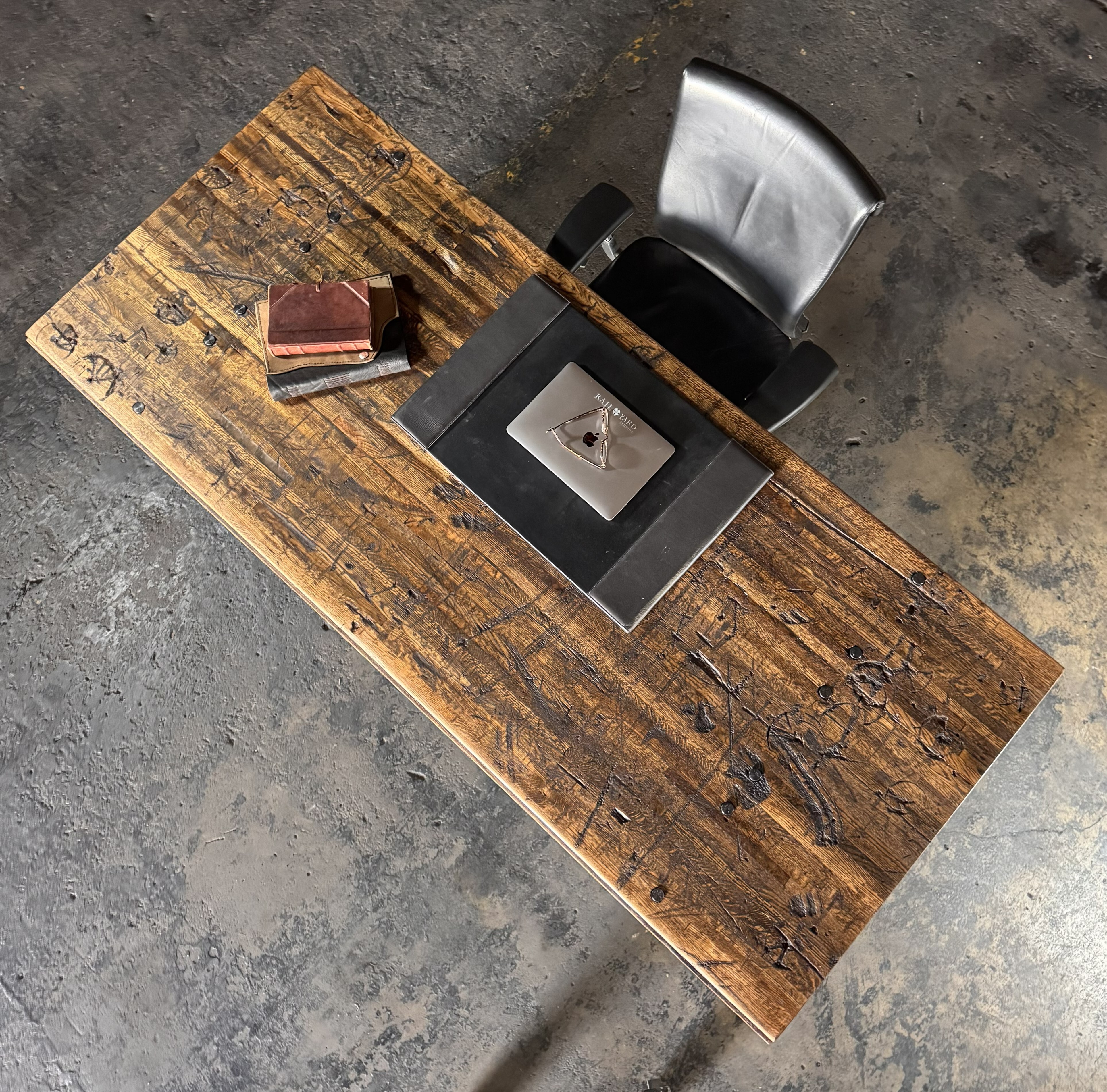
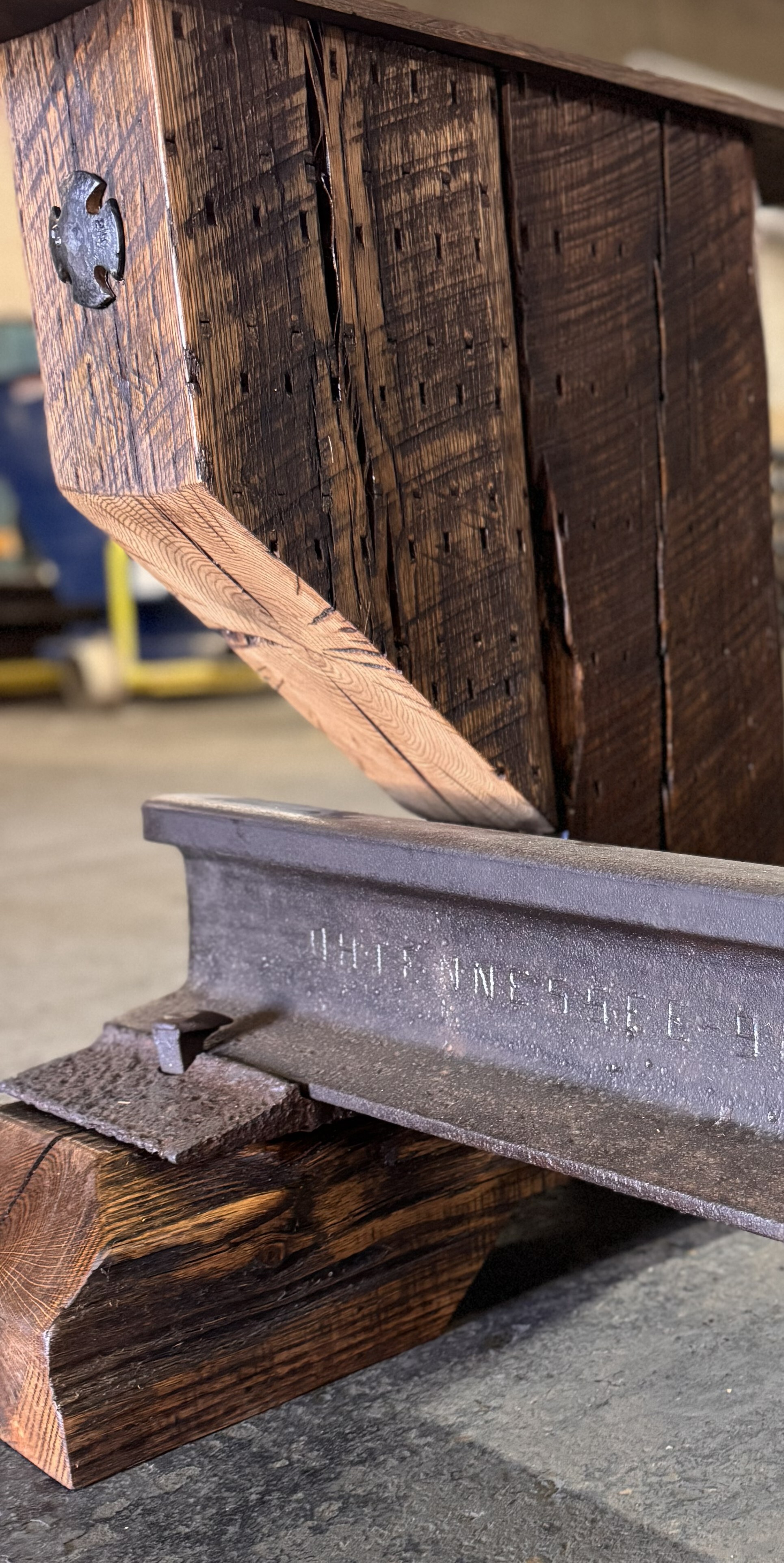
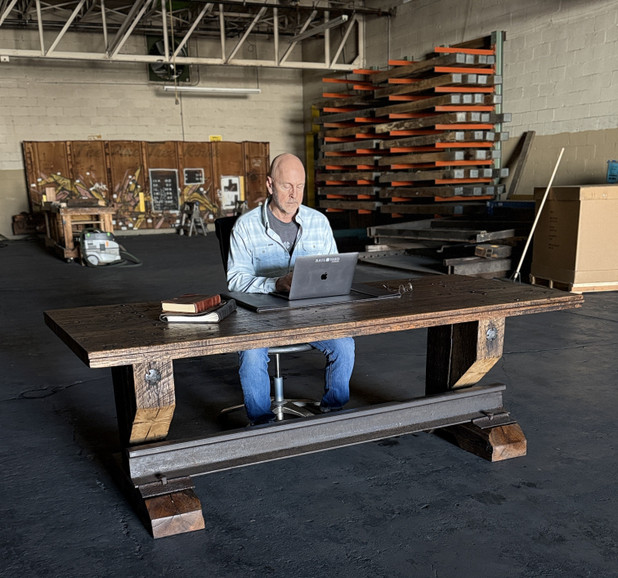
At Rail Yard Studios, steel has always been more than a material—it’s a storyteller. Much of the studio’s work begins with reclaimed railroad steel: rails that once carried freight, history, and momentum across the country. Those same principles—strength, balance, and endurance—are what inspired the Monorail Desk designs.
A monorail desk doesn’t rely on four predictable legs. Instead, it uses a single central beam—a nod to monorail engineering—carrying the load with confidence and grace. The result is a desk that feels both industrial and architectural, grounded and floating at the same time.
Why the Monorail Desk Works
Just like its transit counterpart, the monorail desk is about doing more with less:
- Structural honesty: one beam, visibly doing the work
- Industrial heritage: often fabricated from reclaimed railroad steel
- Modern balance: visually light, structurally massive
- Intentional design: nothing decorative without purpose
These desks feel at home in creative studios, executive offices, and modern lofts—spaces where people want their furniture to say something without shouting.
The Bigger Picture
Monorails remind us that the railroad industry has never been only about brute force or utility. It’s also about innovation, elegance, and reimagining how steel can shape the way we move—and work.
At Rail Yard Studios, that philosophy lives on in furniture form. The monorail may no longer just carry passengers above city streets—but its spirit now supports laptops, blueprints, coffee cups, and big ideas.
Steel evolves. Rails adapt.
And sometimes, the future of rail shows up right under your hands.