
Steel Has a Memory: Date Nails & the Story of the American Railroad
Posted by Sally Hendrick on Feb 9th 2026
When you hold reclaimed rail steel, you’re not just holding an object—you’re holding time.
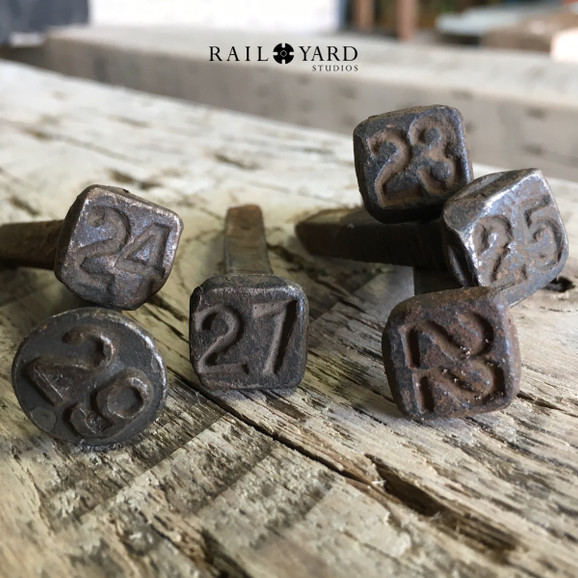
Stamped into that history are railroad date nails: small steel artifacts marked with the year a crosstie was manufactured. What began as one of the earliest examples of quality control in the industrial world has become a quiet timestamp of American history.
Each date nail ties our furniture to a real decade, an iconic moment, and a rich story of what steel can do.
What Are Railroad Date Nails?
Date nails were driven into railroad ties to mark installation years. Today, they connect reclaimed steel to specific eras—turning each piece into a time capsule. A nail stamped “27” points to flood-era rail. “33” points to Depression rail. “44” to wartime rail. Steel remembers.
A Century of Rail, Told in Five Decades
1920s — Steel Held the Line
In the 1920s, rail was America’s backbone. During the historic floods of 1927, rail lines became lifelines—carrying supplies, evacuating families, and standing as the last dry ground when roads failed. Steel from this era was built heavy because failure wasn’t an option.
Furniture that feels anchored and protective:
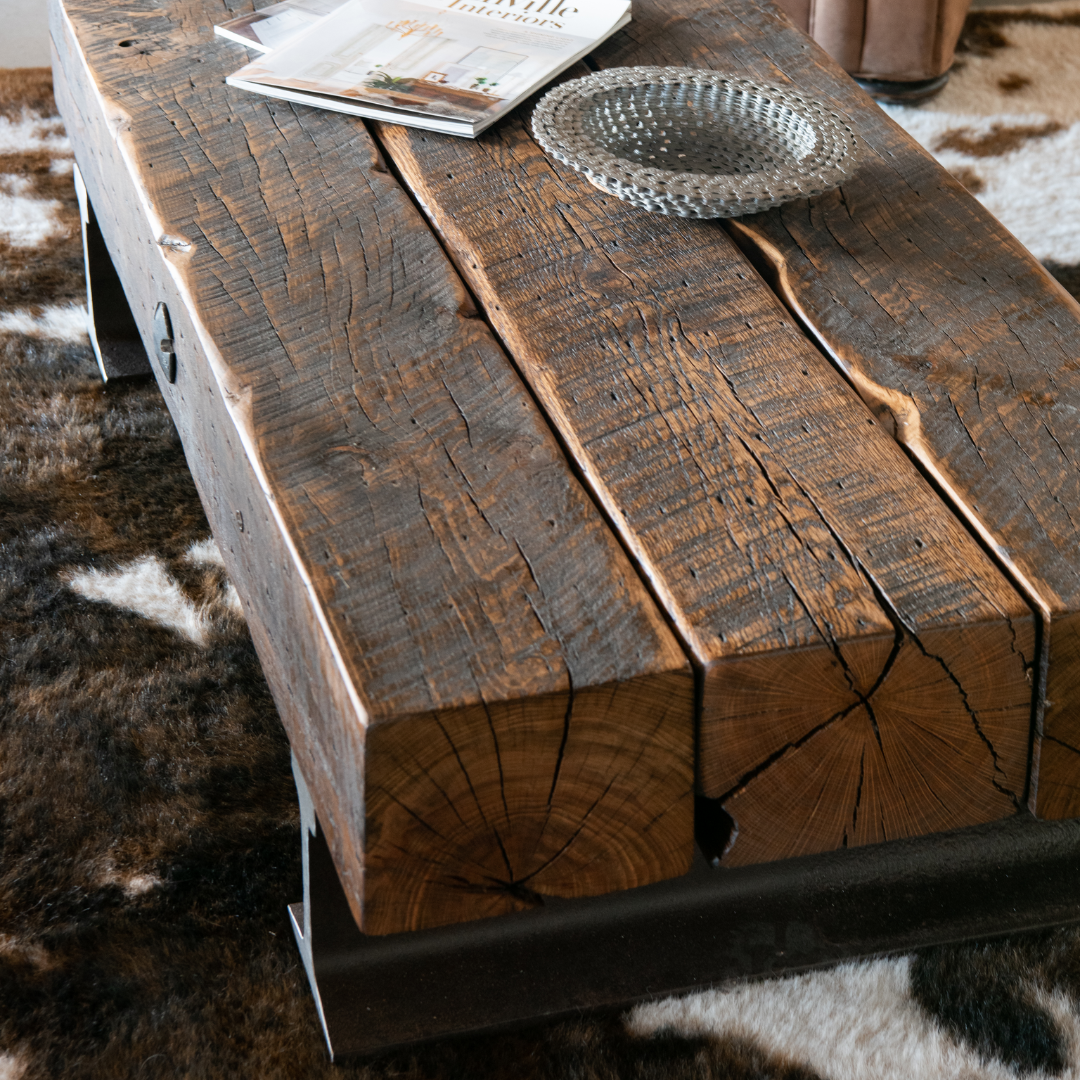
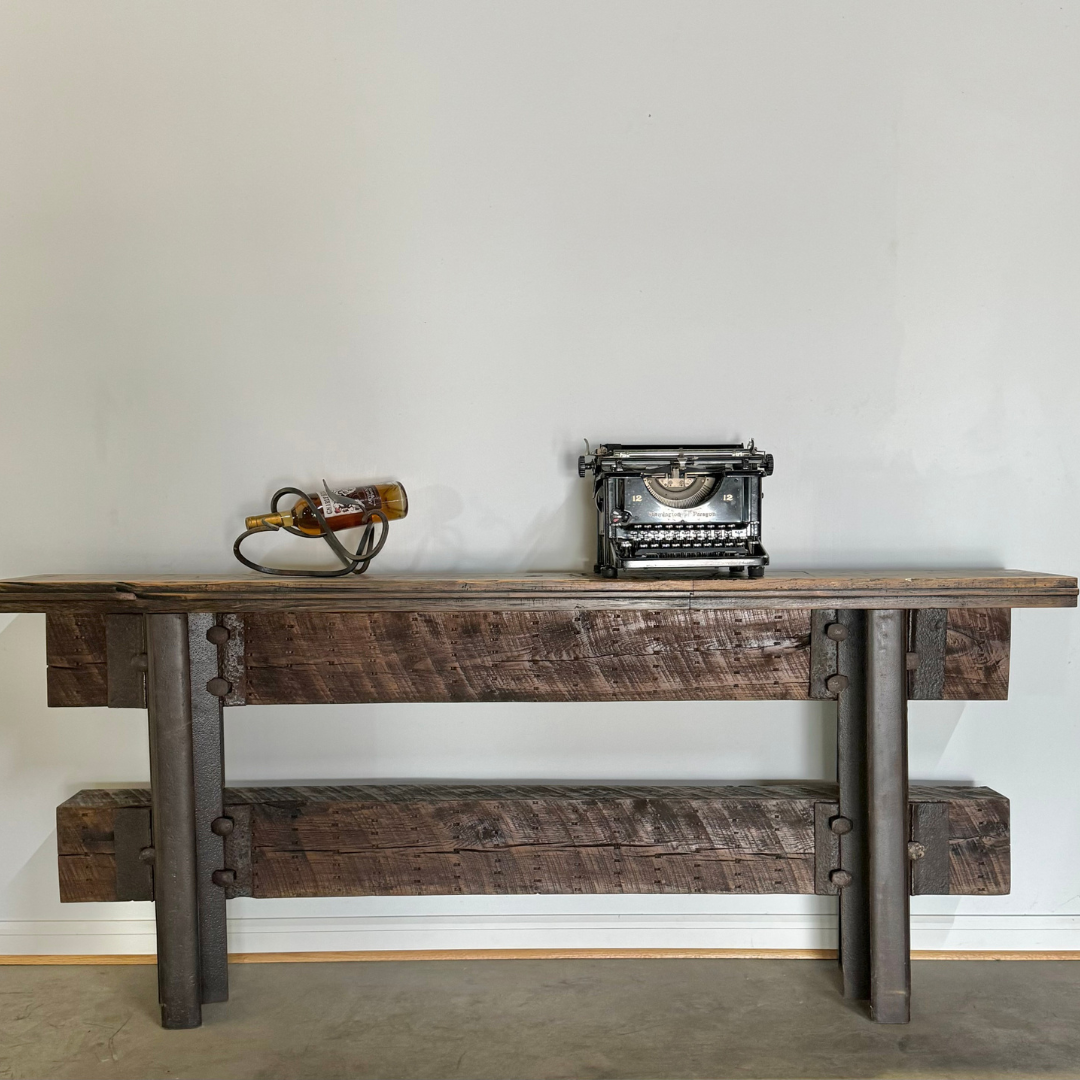
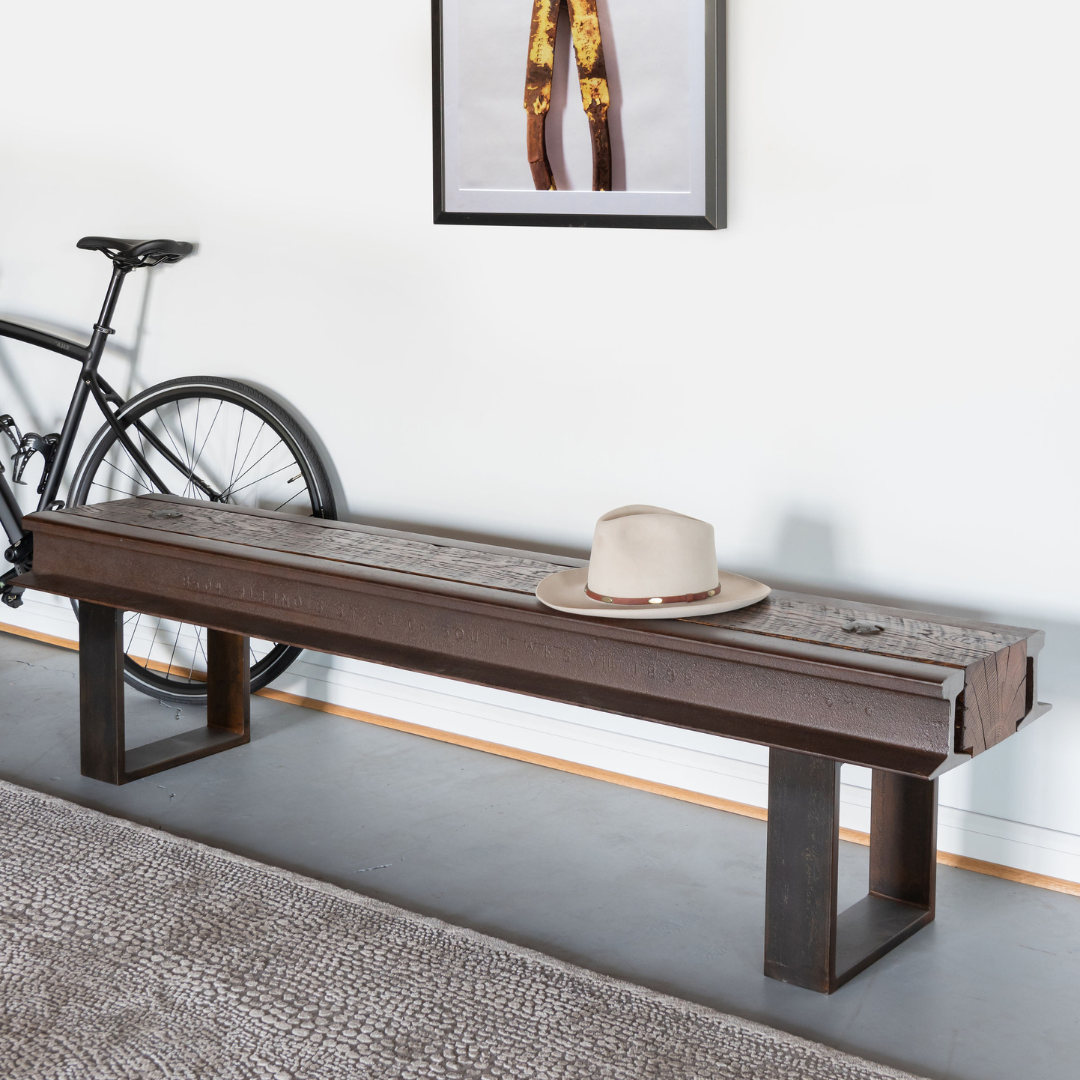
Pictured Left to right: Flatcar Coffee Table; Narrow Gauge Credenza; Elevated Bench
1930s — Steel Became the Way Out
The Great Depression turned railroads into moving roads for survival. People rode freight trains searching for work and food. Rail yards became temporary communities. The steel from this decade carries the imprint of hands, boots, and movement—worn smooth by necessity.
Furniture that feels shared, traveled, and human:
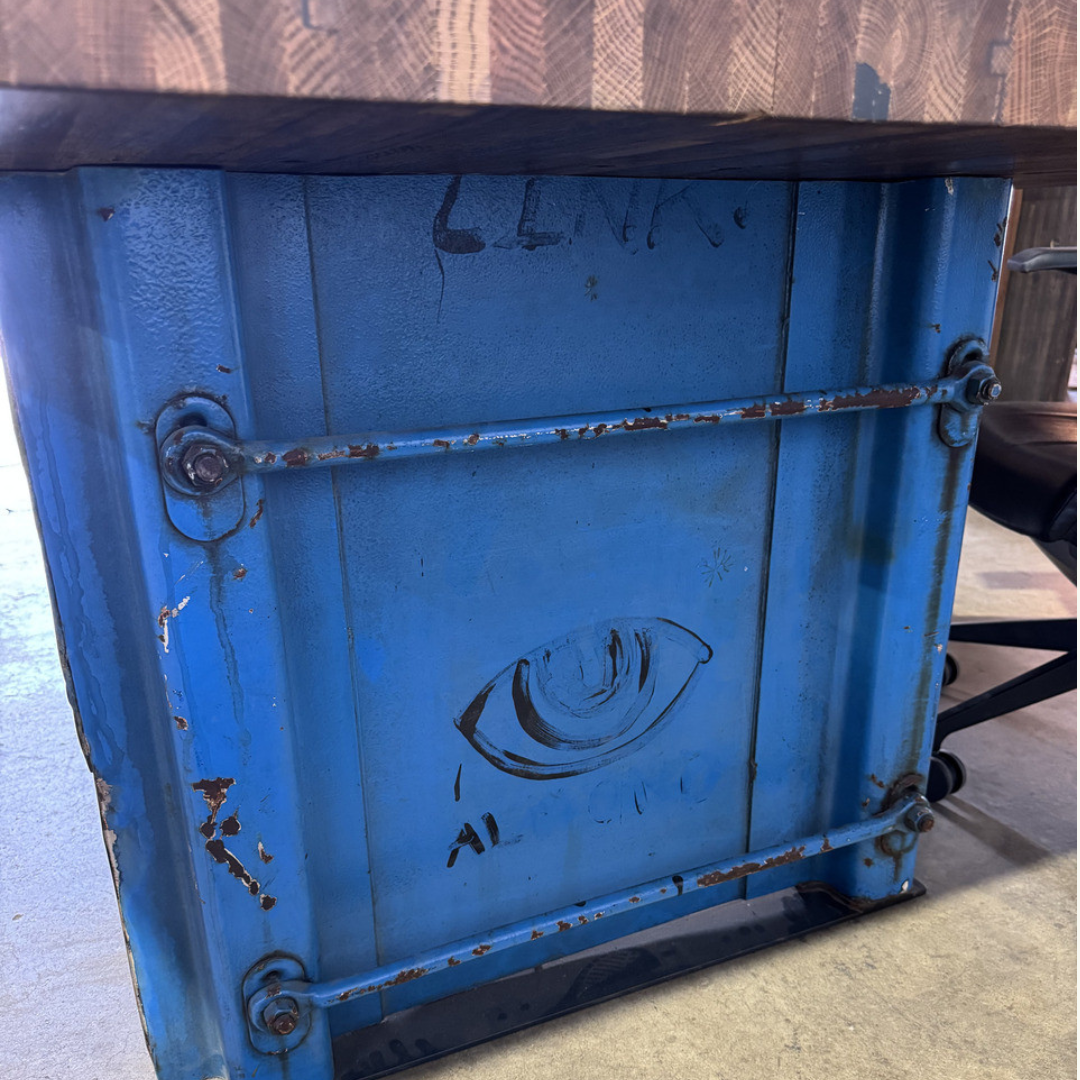
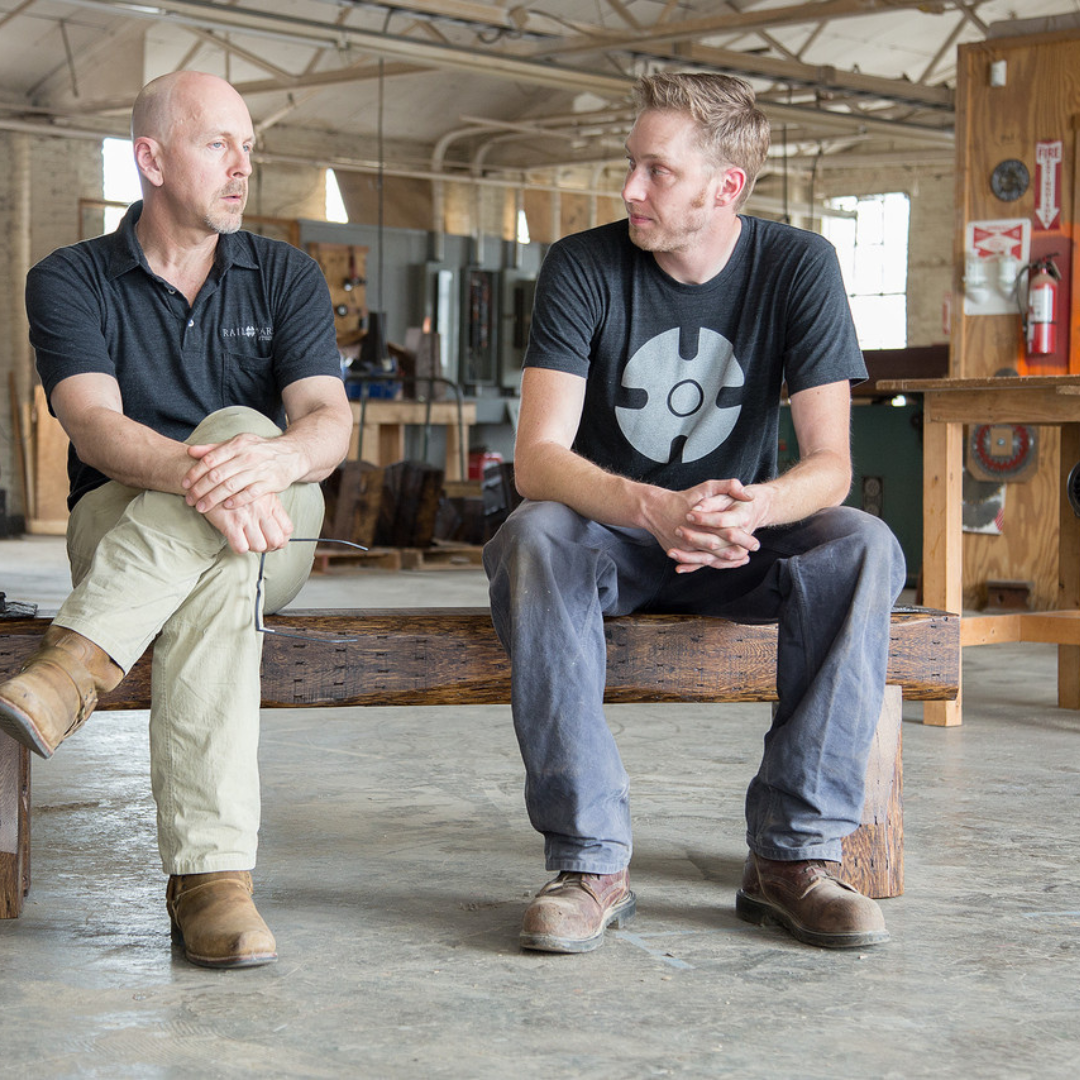
Pictured left to right: Blue Ladder Dining Table; Streamliner Bench
1940s — Steel Moved a Nation
During World War II, railroads moved troops, tanks, supplies, and food nonstop. Rail yards ran day and night. Steel laid decades earlier suddenly carried the weight of a nation at war.
Furniture built for gathering, planning, and purpose:
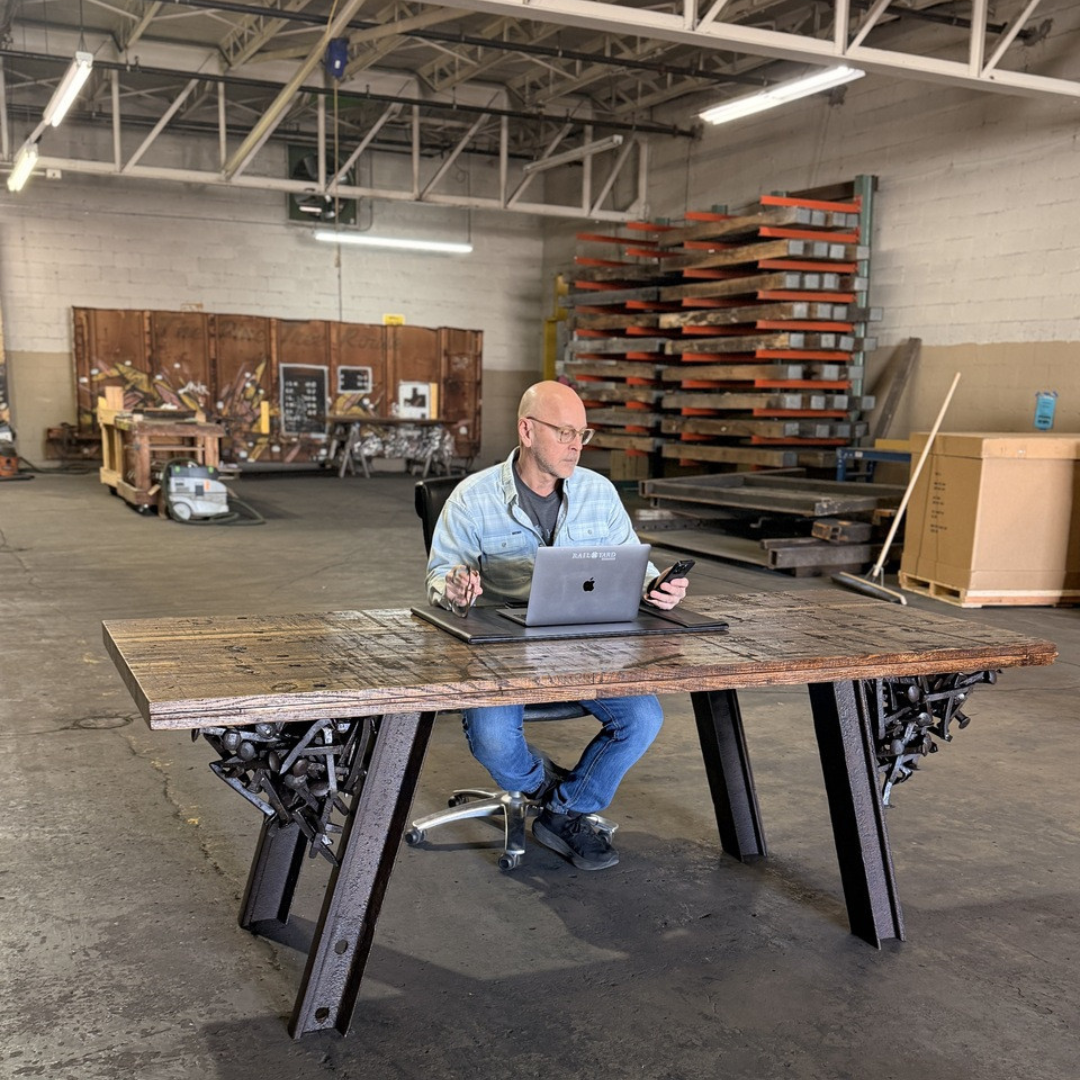
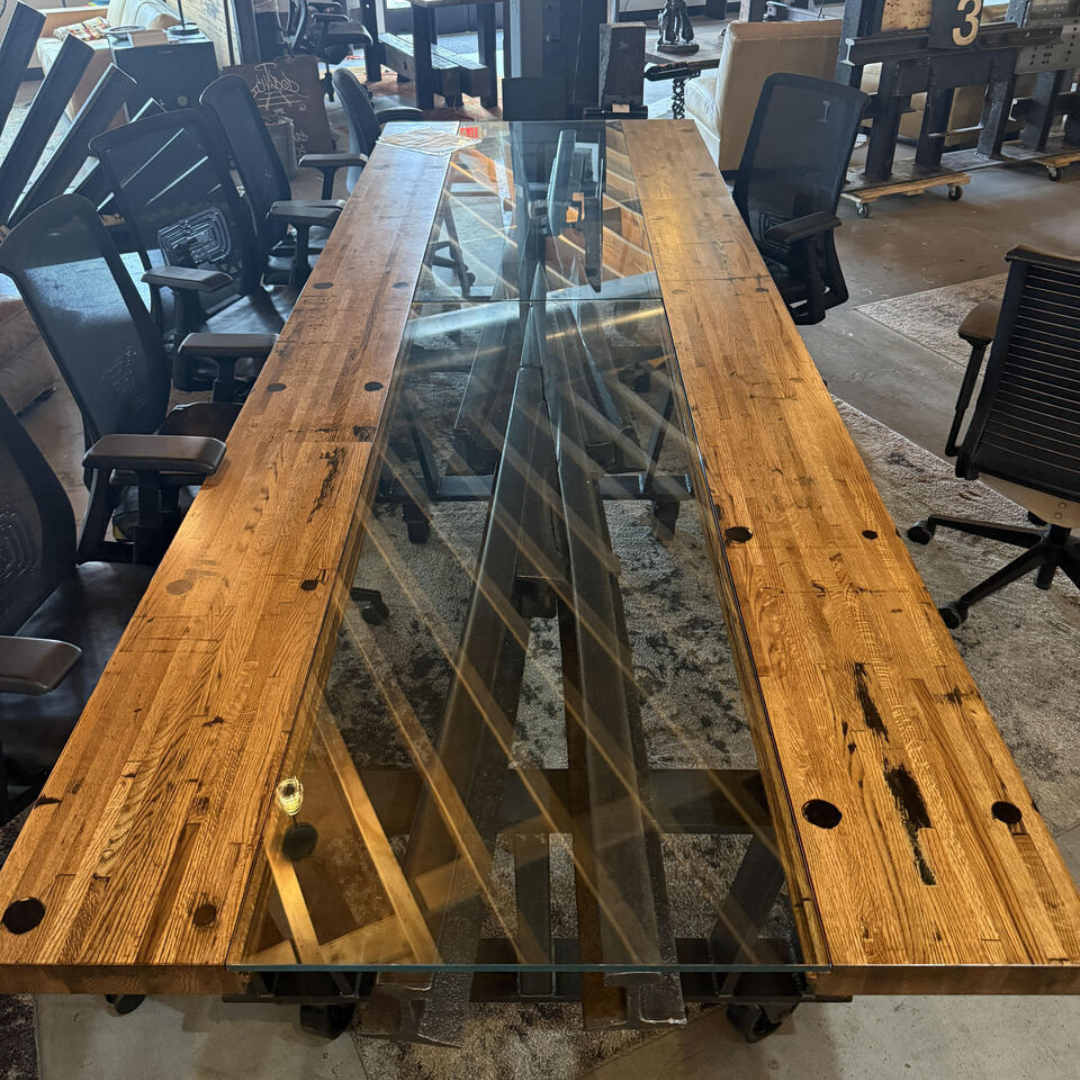
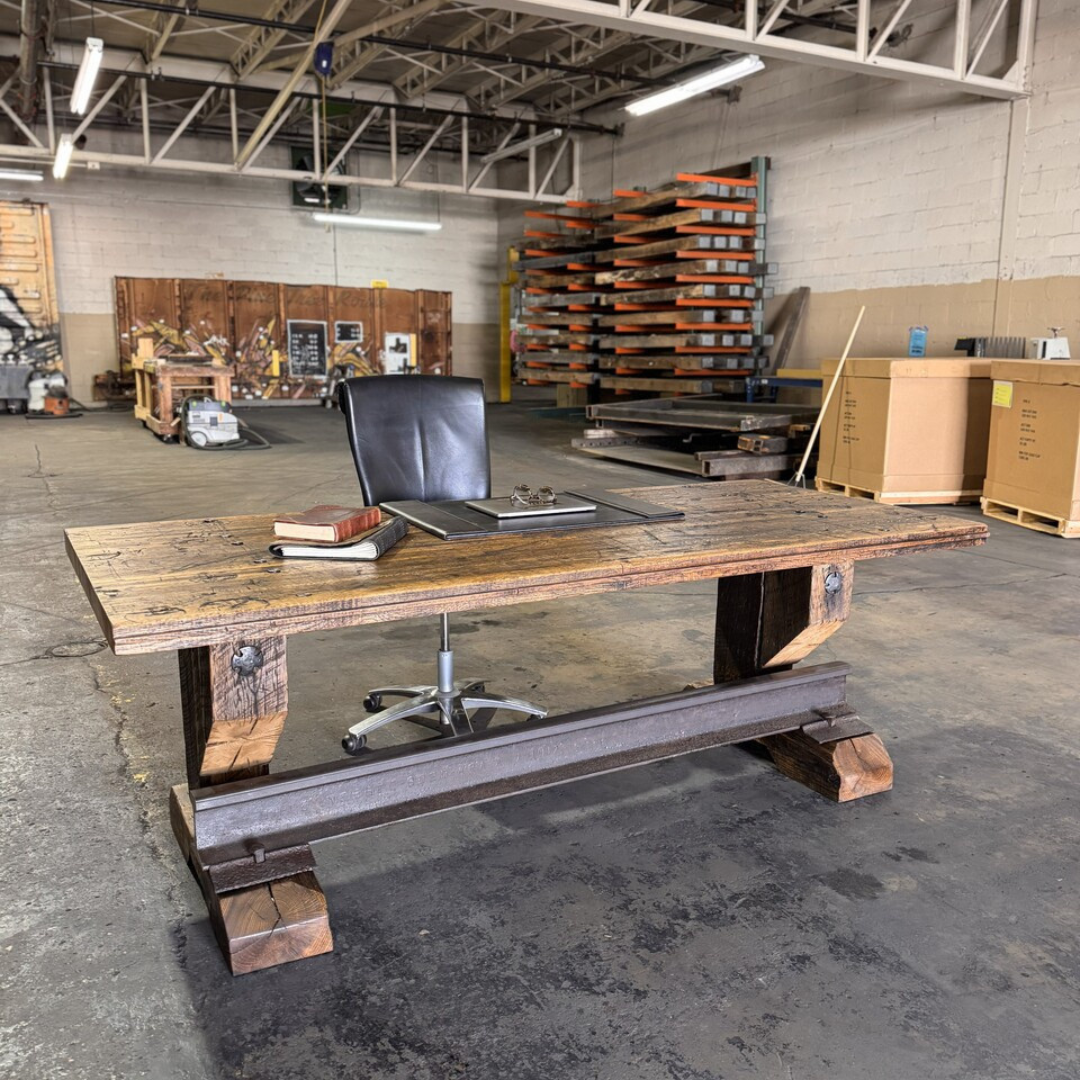
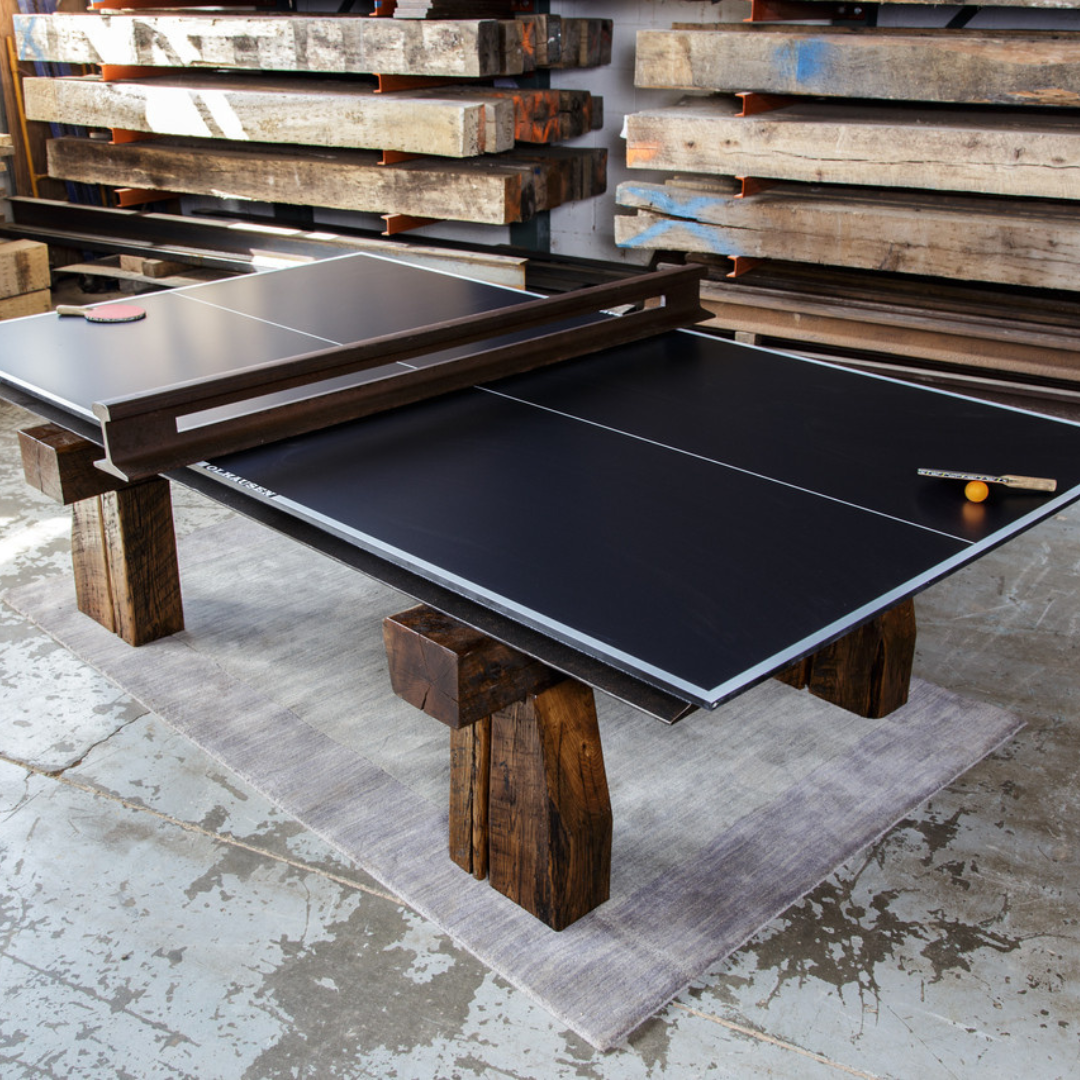
Pictured left to right: Spiked Desk; Frog Conference Table; Monorail Desk; Ping Pong Table
1950s — Steel Outlived Romance
The 1950s marked the shift from steam to diesel. The railroad didn’t disappear—but the soul of the work changed. Steel from this era carries both histories: the heat of steam and the efficiency of diesel.
Furniture that shows contrast and transition:
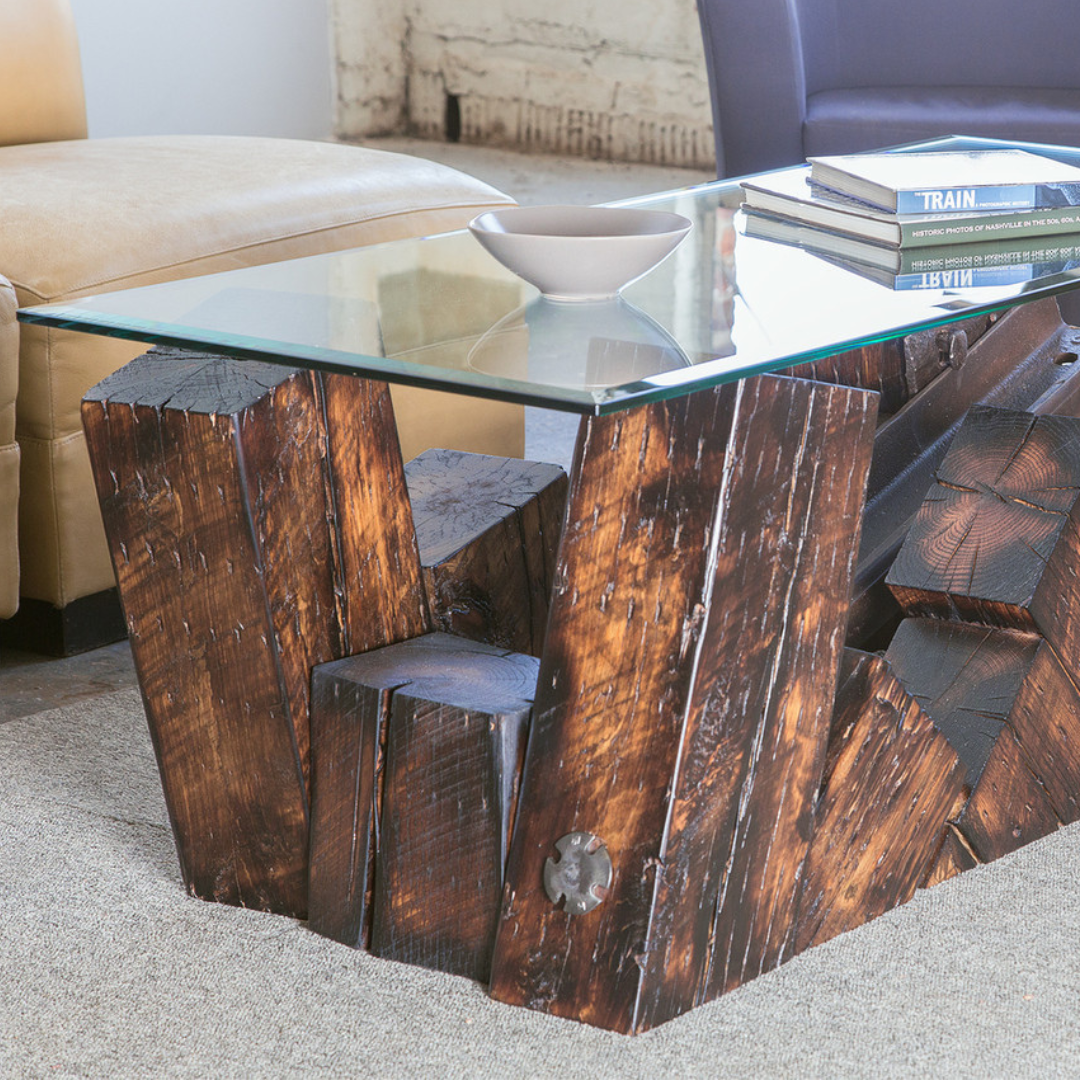
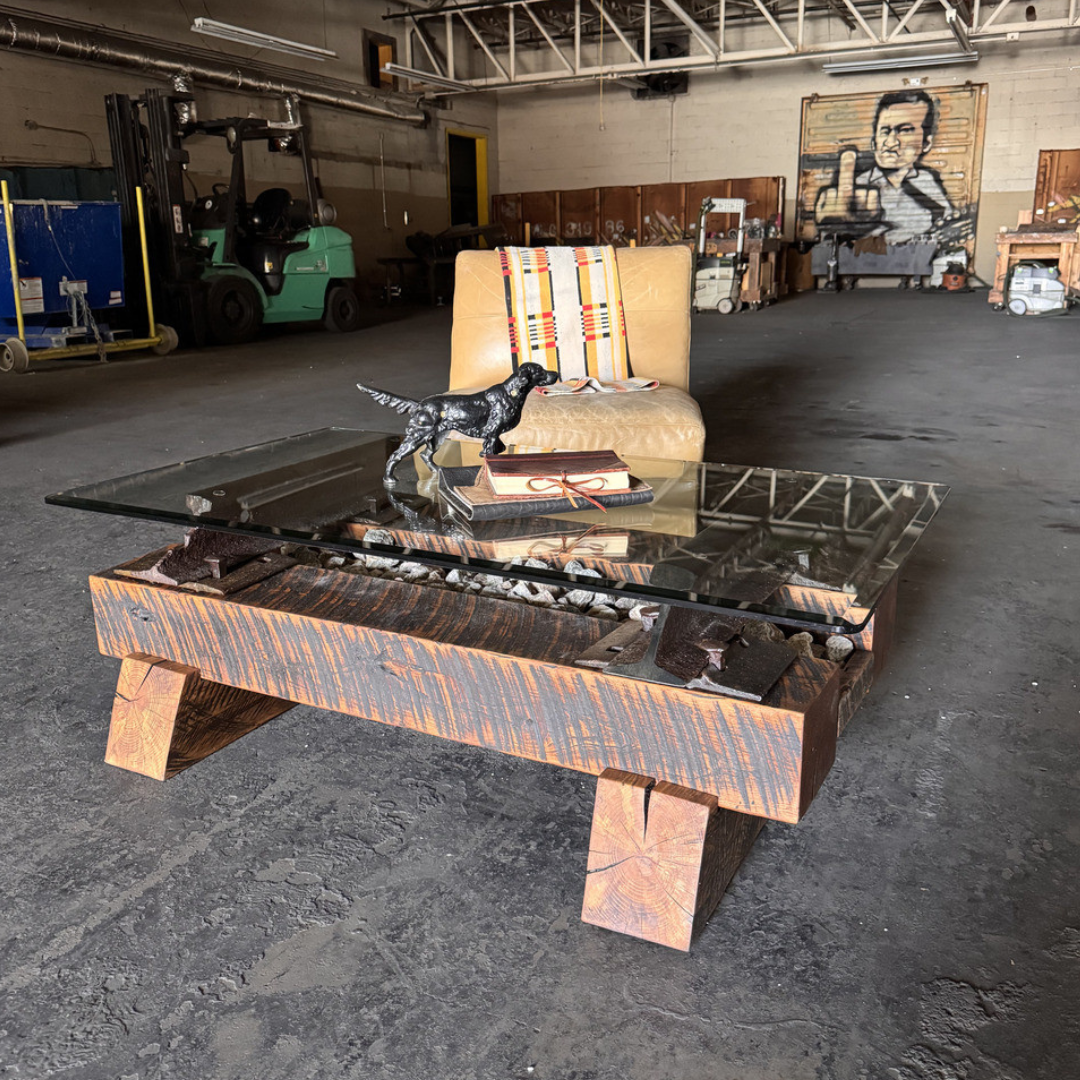
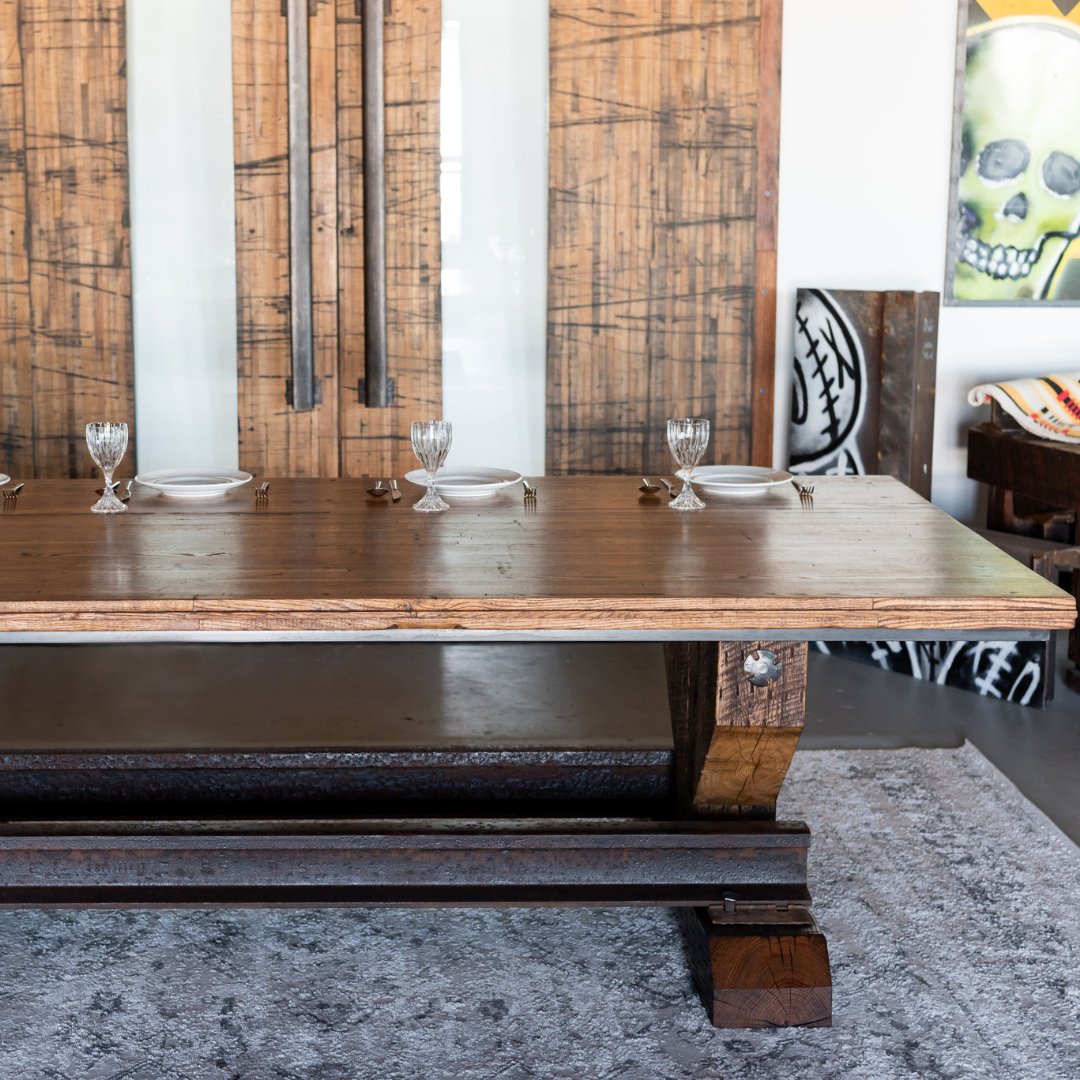
Pictured left to right: Derailment coffee table; Sleepers coffee table; Trestle dining table
1960s — Steel Learned Endurance
By the 1960s, highways and airlines stole the spotlight, but freight rail endured. Old steel was pulled, relaid, reused—quietly doing its job without applause. This era’s steel is about survival, not spectacle.
Furniture pairing that feels quiet, strong, and unbreakable:
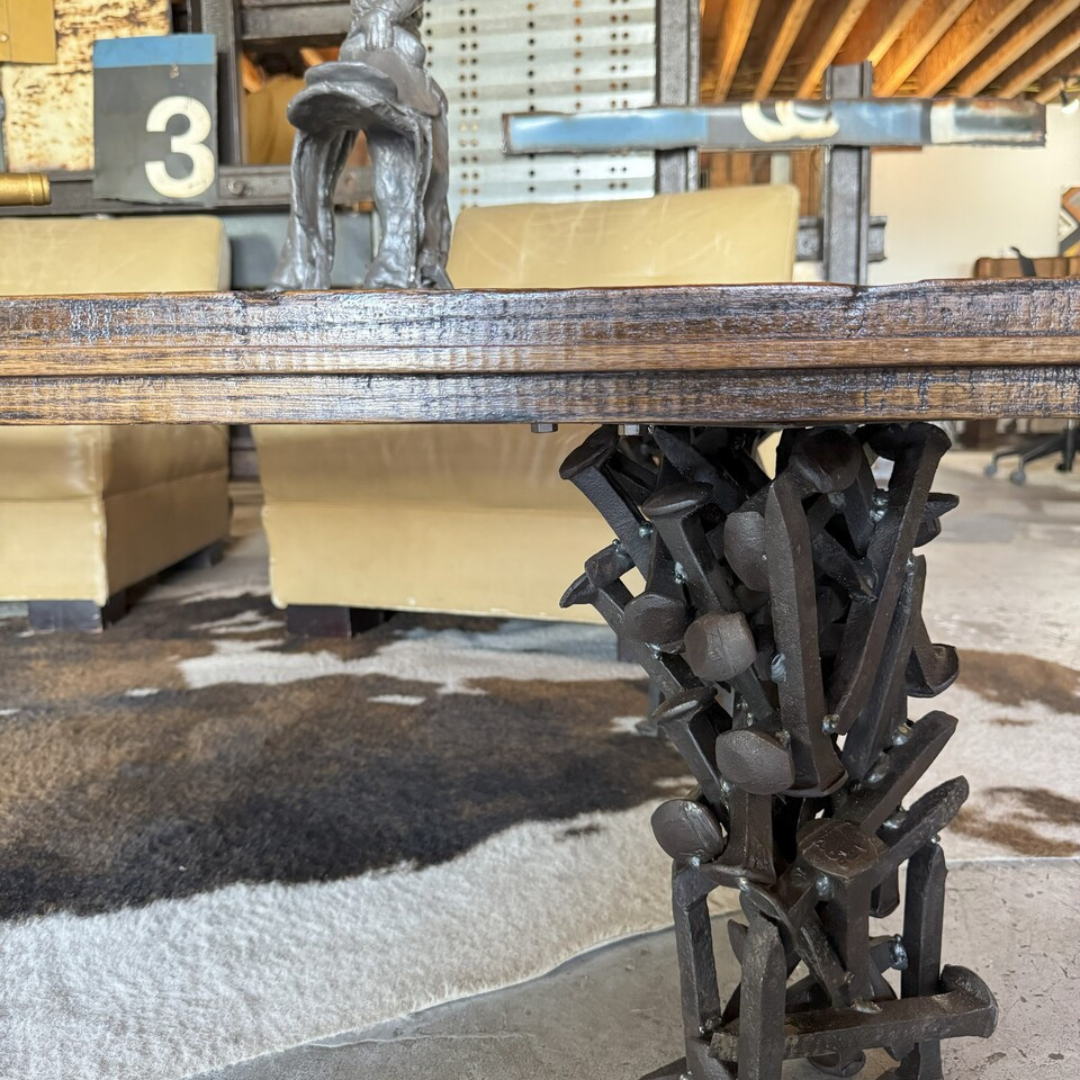
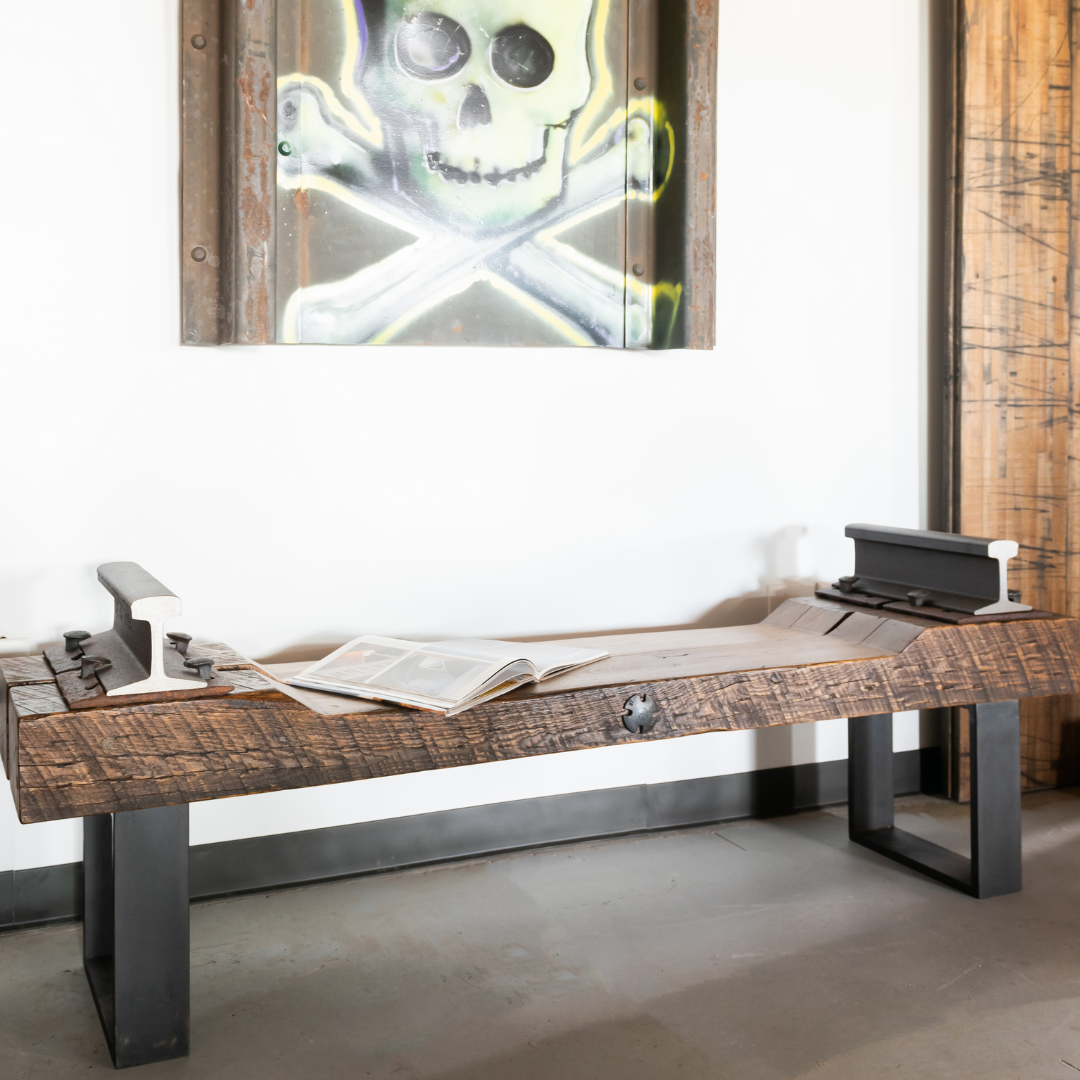
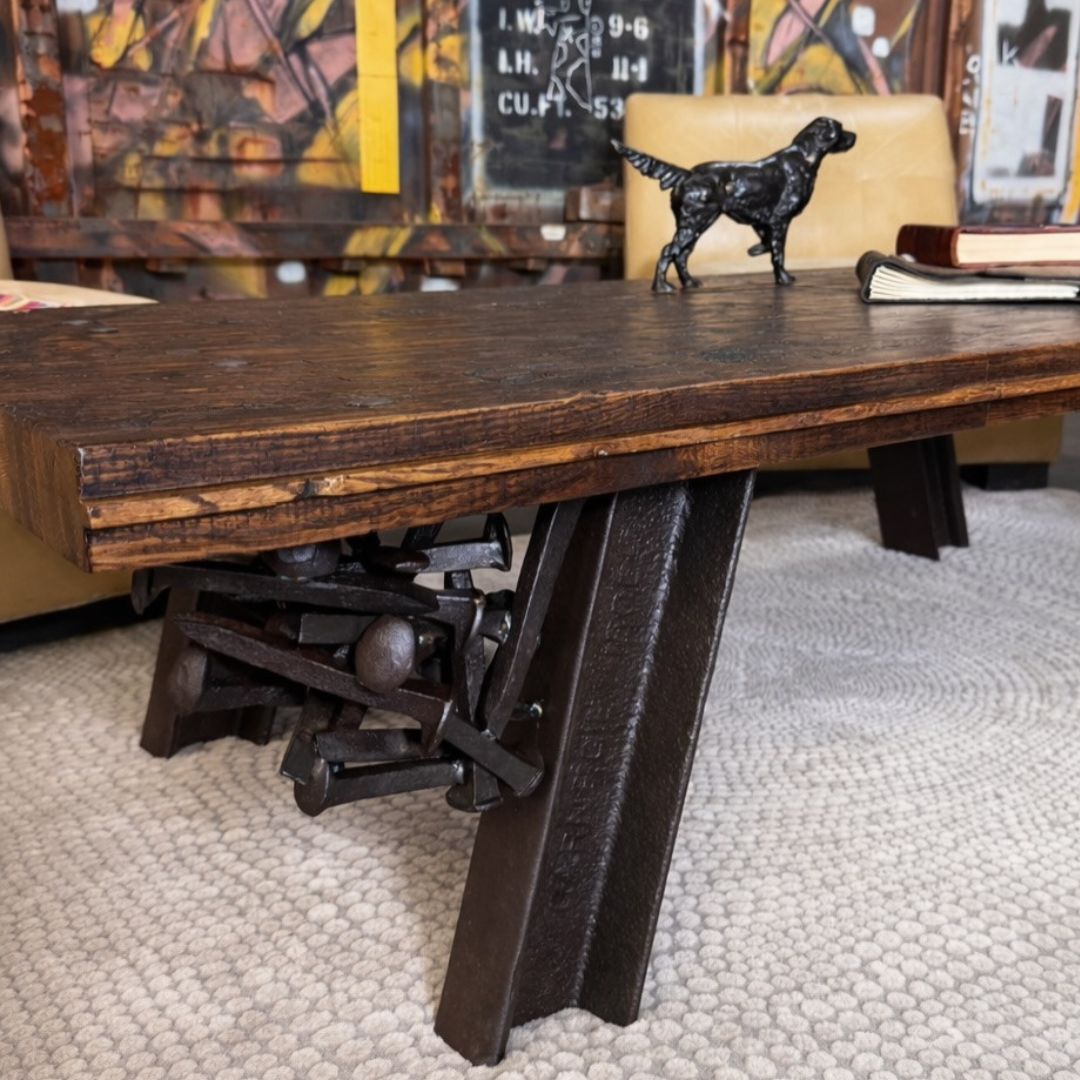
Pictured left to right: Scrapyard Coffee Table; Mountain Pass Bench; Spiked Coffee Table
Why Date Nails Matter in Our Furniture
Each date nail connects a piece of furniture to a decade when steel served a different purpose—holding back floods, carrying survival, moving a nation at war, adapting to change, and enduring without praise.
Our furniture isn’t just built from rail.
It’s built from eras.
Steel has a memory.
And when you live with it, that memory lives with you.