Where the Tracks Cross: The Story of the Railroad Frog
Posted by Sally Hendrick on Apr 20th 2026
What Is a Railroad Frog?
If you hear someone talking about a frog on the railroad tracks, don’t picture something green hopping between the rails.
A railroad frog is one of the most fascinating pieces of track work ever designed. It is the cast steel crossing point where two rails intersect, allowing train wheels to move from one track to another. In simple terms, it is where decisions get made. One direction leads here. Another goes there. And somehow, with tons of steel in motion, the transition happens with precision.
Built for Function, Remembered for Form
Like so many parts of the railroad, the frog was created for function first. But function has a way of becoming beautiful when it is built to last.
Railroad frogs have a rugged geometry to them—angled lines, sharp edges, heavy steel, and an unmistakable sense of purpose. They were never made to be decorative. They were made to endure. Day after day, year after year, they handled the force of locomotives, freight cars, and the constant rhythm of movement. They sat low to the ground, taking the weight of the railroad without asking for attention.
The Overlooked Piece That Made Movement Possible
That may be what makes the railroad frog so compelling. It was never the star of the show. It was not the locomotive, the caboose, or the shining rail stretching into the distance. It was the mechanism beneath the story—the part that quietly made change possible.
Every time a train shifted tracks, a frog was there doing its job. It helped guide the wheels, carry the load, and create a seamless transition from one direction to another. It was engineering with consequences. If it worked well, no one noticed. If it failed, everyone did.
 From Trackside History to Coffee Table Design
That kind of history is exactly what makes railroad frogs such a natural fit for furniture design.
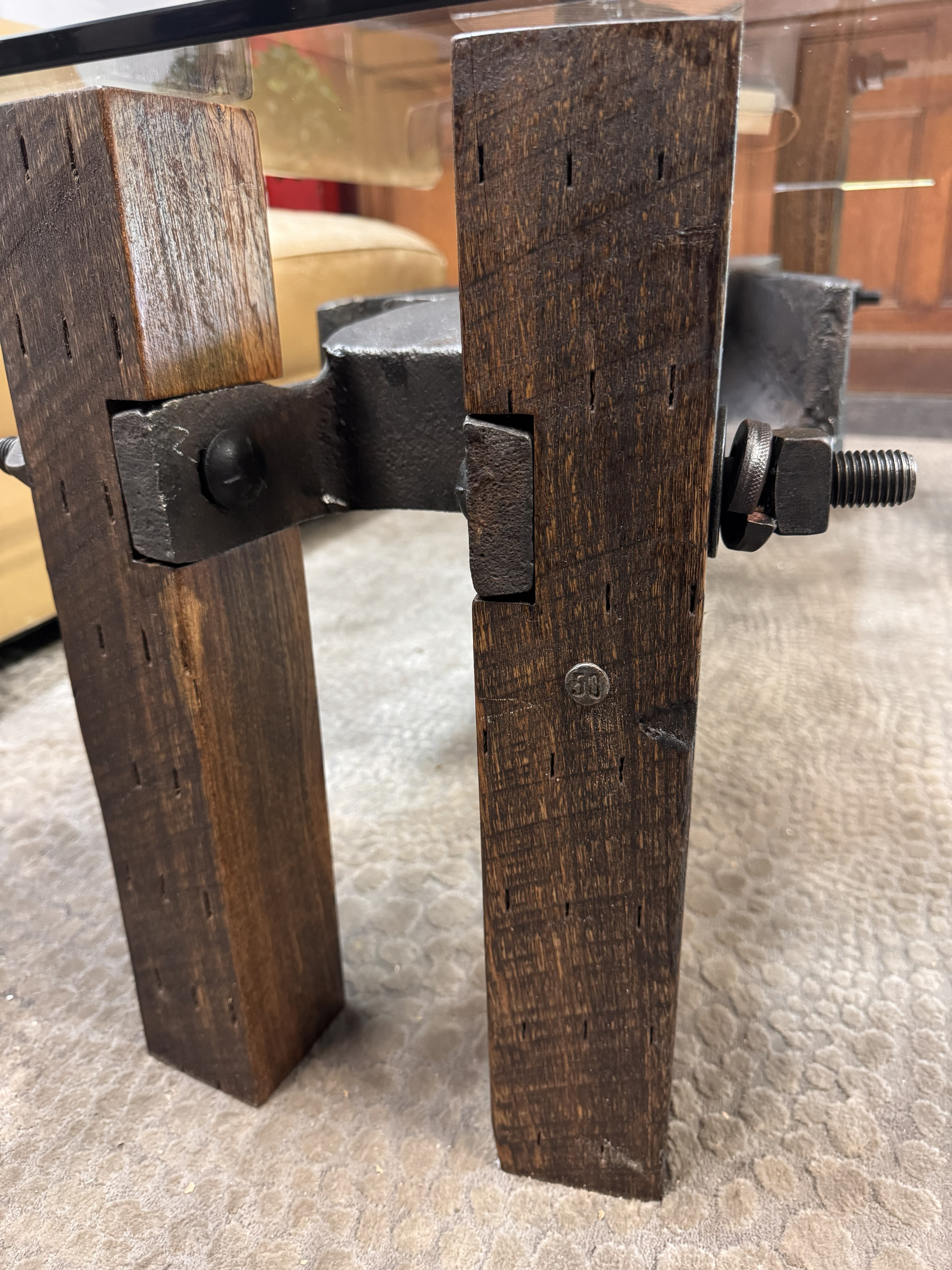
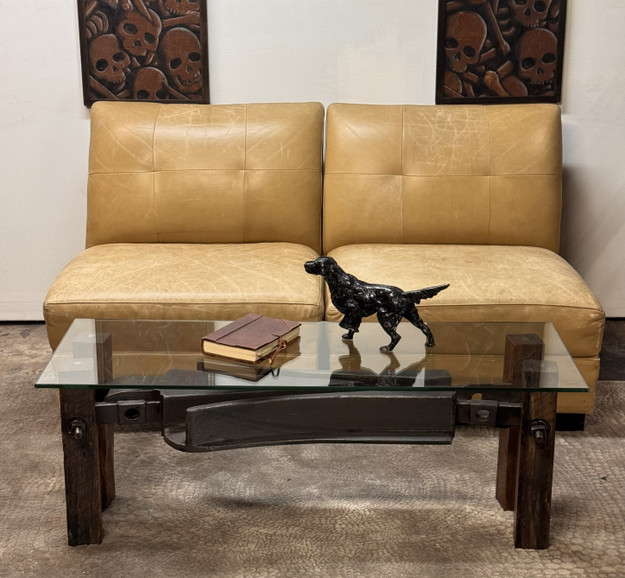
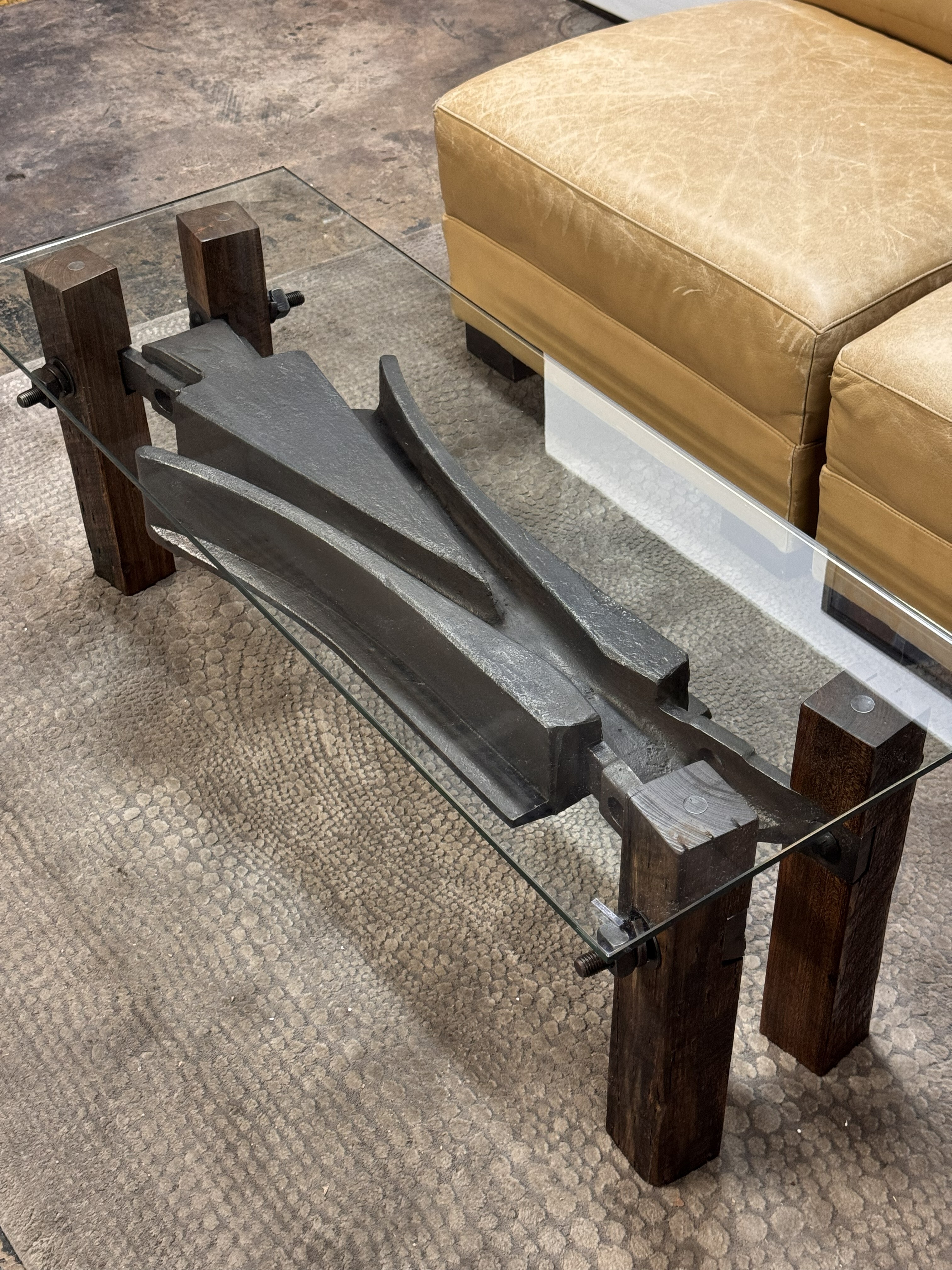
Rail Yard Studios recently got their hands on six railroad frogs that are perfect for making coffee tables. Not too heavy, yet substantial enough to carry the full visual impact of their original function, these pieces show the mechanics of track switching in a way that is both sculptural and historic. Beneath a glass top, every angle, bolt, and crossing point is on display, turning industrial design into a conversation piece.
Grounded by the Ties
The legs are formed from railroad ties, bringing in another essential part of the track system. While the frog handled the crossing, the ties provided the support. Together, they represent the balance that kept the railroad moving: steel and timber, direction and stability, motion and strength.
A Conversation Piece with a Past
The Frog Coffee Tables do more than hold a cup of coffee. They preserve a piece of railroad ingenuity in a form people can live with every day. What once guided trains across intersecting rails now anchors a room with history, craftsmanship, and presence.
It is a reminder that some of the most interesting railroad stories were happening right under the wheels.