
Andrew Carnegie and the Carnegie Steel That Built America’s Railroads
Posted by Sally Hendrick on Aug 12th 2026
Before Andrew Carnegie became one of the wealthiest men in American history, he recognized something that would transform the country: America’s future would be built with steel—and much of that steel would travel by railroad.
Born in Scotland in 1835, Carnegie immigrated to the United States as a boy and eventually entered the railroad industry. He saw firsthand how rapidly the American railroad system was expanding and understood the enormous demand for stronger, more durable steel railroad rail.
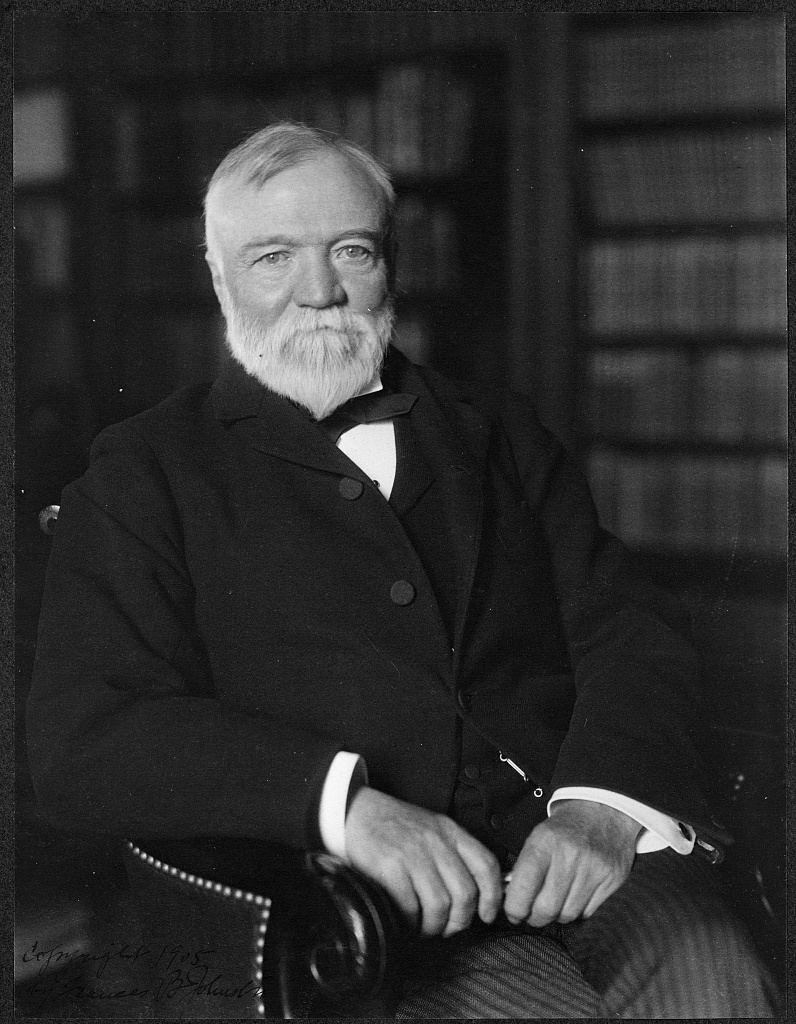 That opportunity helped build Carnegie Steel Company into an industrial powerhouse.
During the late 1800s, Carnegie invested heavily in steelmaking technology, including the Bessemer process, which dramatically improved the speed and cost of steel production. Carnegie Steel also controlled much of its supply chain, from raw materials and transportation to furnaces and steel mills.
And its mills produced an extraordinary amount of Carnegie railroad steel.
Steel rails helped replace earlier iron rails as America’s railroad network expanded across the country. Carnegie Steel helped supply the material connecting factories, farms, cities, mines, and communities. The railroad transformed American commerce, and Carnegie’s steel was literally part of the infrastructure beneath it.
In 1901, J.P. Morgan purchased Carnegie Steel as part of the creation of U.S. Steel, the first billion-dollar corporation in American history. Carnegie’s name, however, remained stamped into pieces of railroad history.
More than a century later, some of those markings survive.
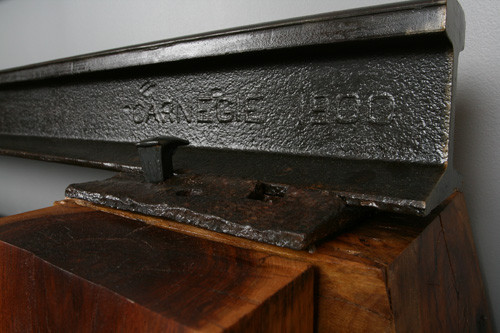
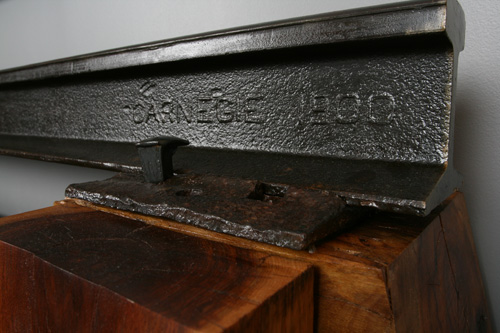 At Rail Yard Studios, we reclaim vintage railroad rail..
..and other authentic railroad materials to create handcrafted railroad furniture. Occasionally, that steel carries one particularly recognizable name stamped into its side:
CARNEGIE.
These markings can help reveal who manufactured the rail and when it was rolled. What might otherwise look like a weathered piece of reclaimed railroad steel becomes a physical connection to the industrial history that helped build America.
Instead of sending this historic railroad steel to the scrapyard, we give it another purpose. Reclaimed rail becomes desks, conference tables, coffee tables, benches, and other one-of-a-kind furniture while retaining the wear, markings, and character of its original life on the railroad.
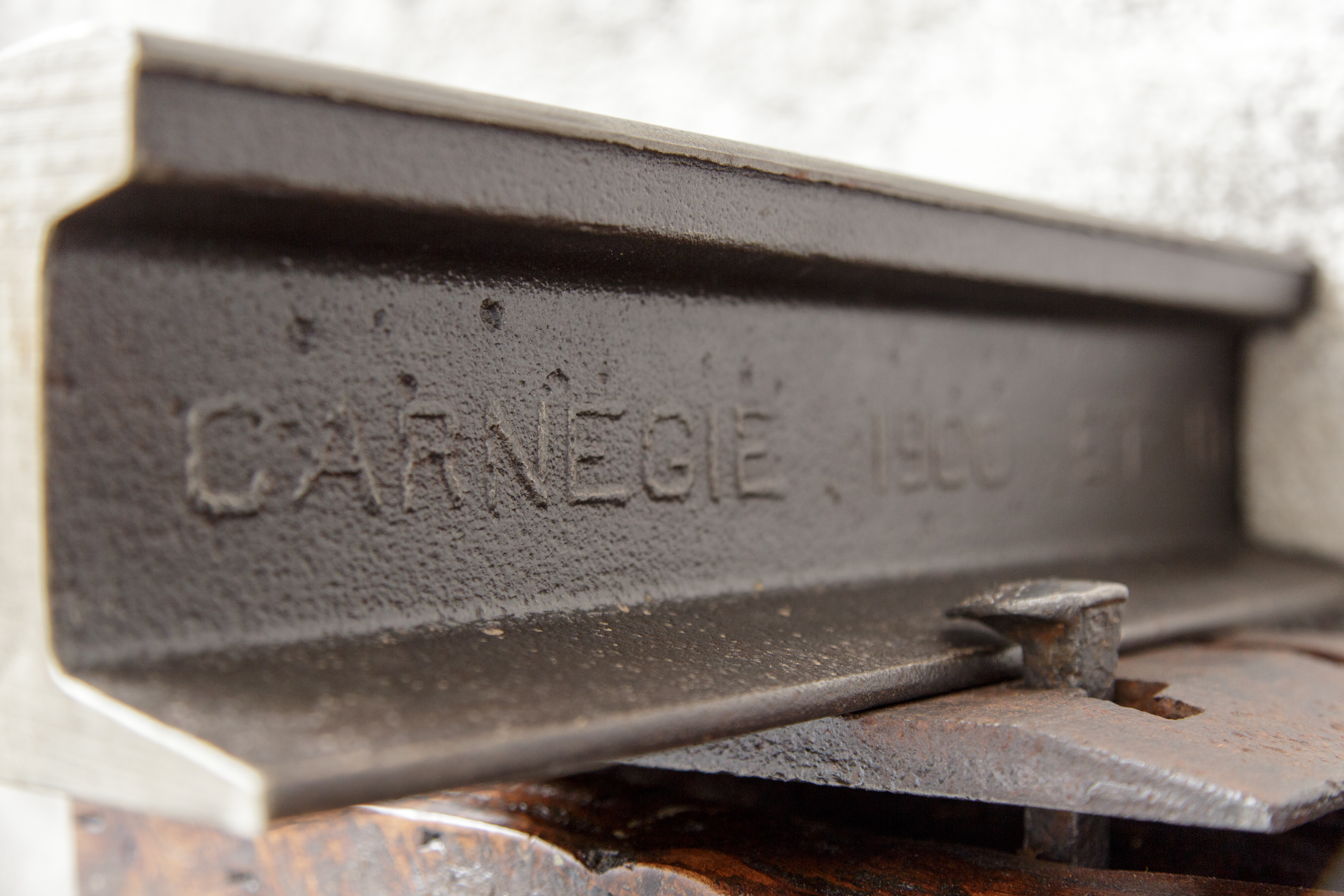 At Rail Yard Studios, finding a piece of reclaimed railroad rail with CARNEGIE embossed into the steel is something special. Rather than grinding away those historic markings or hiding them, we look for ways to make them part of the furniture itself. Carnegie Steel rail can become the foundation of a desk, conference table, coffee table, bench, or other one-of-a-kind piece, with the original lettering left visible whenever possible.
It means the steel that once carried trains across America can begin another life—this time carrying conversations, ideas, meals, and memories. For us, building with Carnegie Steel isn’t simply about reclaiming old railroad material. It’s about preserving a tangible piece of American railroad history and giving it a purpose for another generation.
More than 100 years later, Carnegie Steel is still telling its story.
We’re just giving you a place to sit around it.