
Before Asphalt: The Timber Crossings That Connected America
Posted by Sally Hendrick on Sep 23rd 2026
Long before flashing lights, crossing gates and paved highways, there was a problem wherever a road met a railroad.
How do you get a wagon safely across two steel rails?
The answer was remarkably simple.
Timber.
What is a Timber Railroad Crossing?
A timber railroad crossing uses heavy wooden planks to create a roadway across railroad tracks. The timbers are positioned around and between the rails, providing a surface for vehicles to cross while leaving the necessary space for train wheels to travel along the track. Before modern concrete and rubber crossing systems, timber provided a practical and durable solution where roads and railroads met.
 Where the Road Met the Railroad
As railroads spread across America during the 19th century, tracks increasingly crossed the dirt roads connecting farms, towns and businesses. Railroads needed a surface sturdy enough for horses, wagons and, eventually, automobiles to travel across the track.
One solution was the timbered crossing.
Heavy hardwood planks were installed around and between the rails, creating a relatively smooth roadway while leaving enough space for train wheels to pass through.
It wasn’t glamorous infrastructure. But it connected two transportation systems that were transforming America.
And timber was everywhere on the railroad.
Railroads used wood for bridges, trestles, railcars, crossings and the millions of crossties supporting the track itself. A 1953 paper published by the American Society of Civil Engineers described wood as one of the railroad industry’s most useful materials from its earliest days.
There was good reason.
Wood was plentiful. It was workable. And the right hardwood could withstand tremendous punishment.
 From Railroad Crossing to Executive Desk
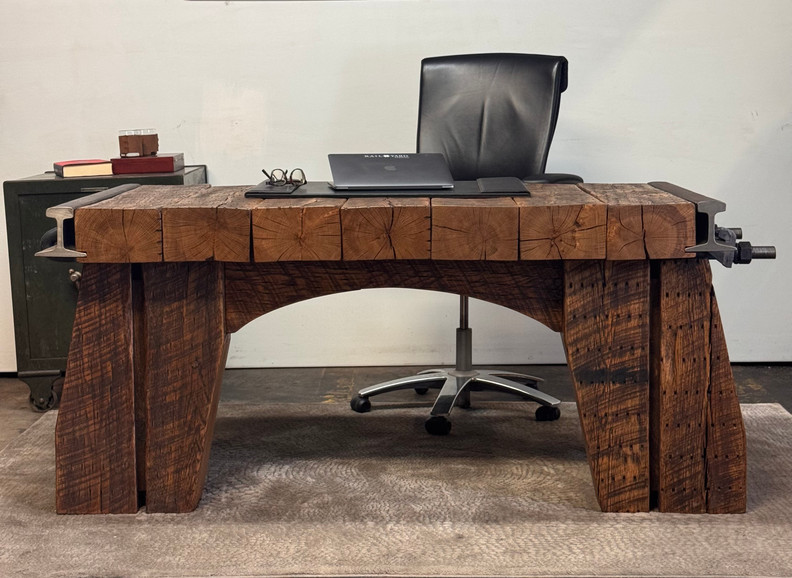
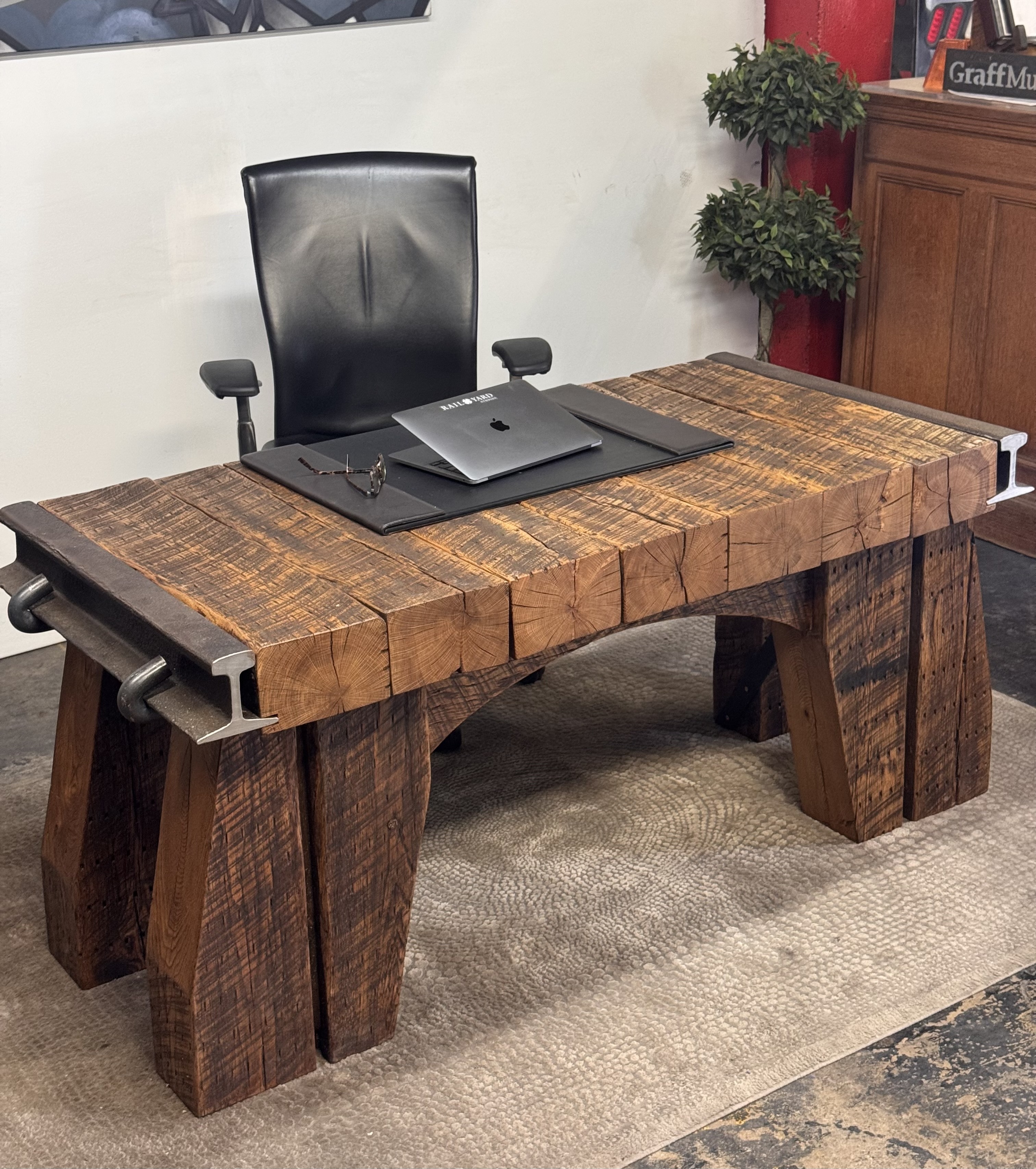
That history inspired the Timber Top Desk from Rail Yard Studios.
The design is built around a selection of substantial hardwood timbers, bookended by sections of century-old railroad steel.
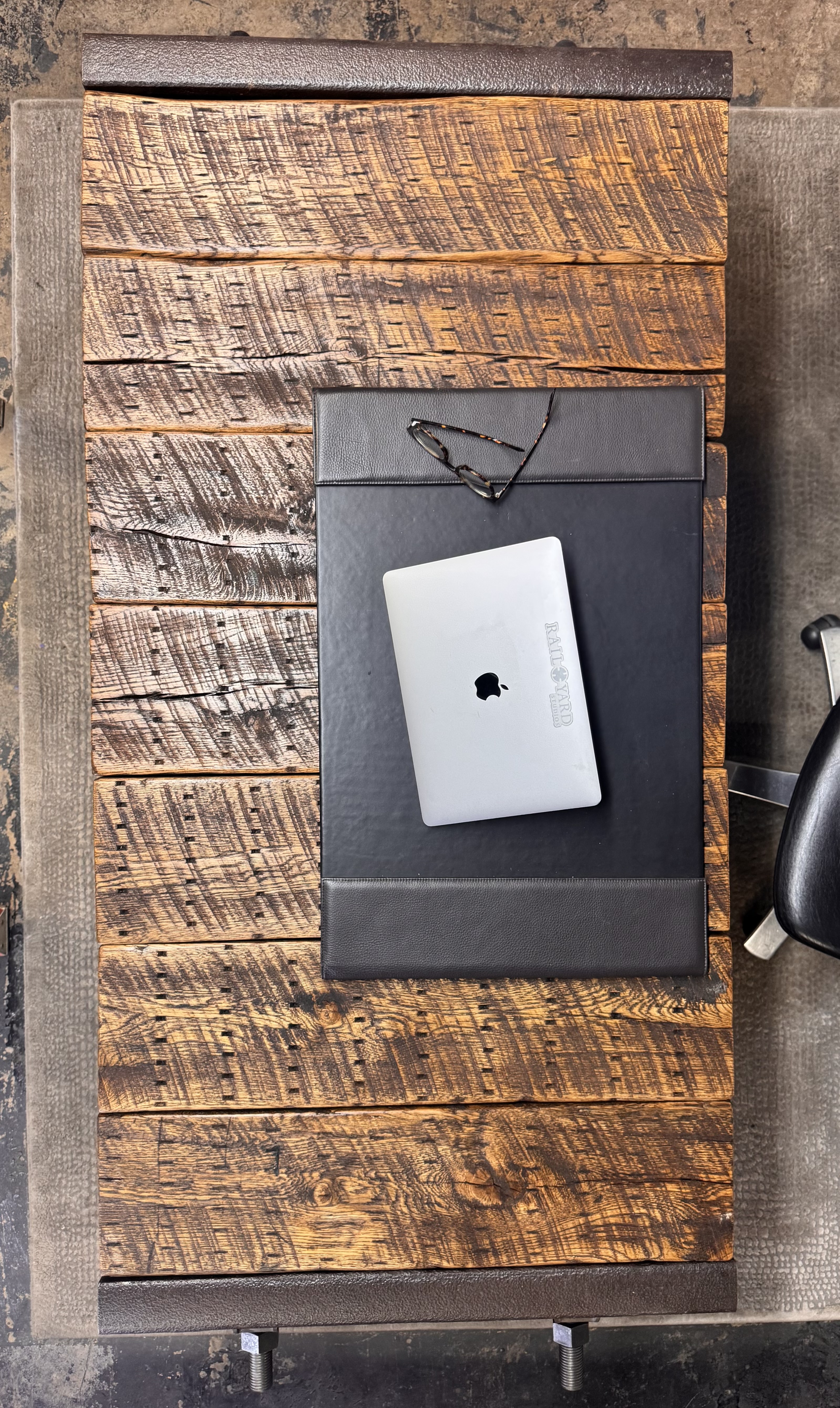
Look at it from above and its railroad heritage becomes unmistakable: steel and timber brought together much as they were at the places where America’s roads once crossed its rails.
The result sits somewhere between industrial and rustic—equally at home in a downtown office or a mountain retreat.
But perhaps the most interesting thing about the desk is what it represents.
A railroad crossing was never really about stopping.
It was about getting to the other side.
More than a century ago, timber helped people cross the railroad and continue wherever they were headed.
Today, those same materials inspire a place to sit down, make decisions and decide where you’re headed next.
Some ideas are worth carrying forward.