
Rail Dogs, Rail Forks and Track Jacks: The Tools That Move the Railroad
Posted by Sally Hendrick on Aug 11th 2026
A railroad rail doesn’t look particularly complicated until you try to move one.
Then you remember: steel is heavy.
A standard 39- to 40-foot stick of rail can weigh anywhere from 1,000 to nearly 2,000 pounds. Yet railroad crews have spent generations lifting, turning and positioning that steel with tools that are surprisingly simple.
At Rail Yard Studios, we love those tools almost as much as the rail itself because every one tells part of the story behind the railroad.
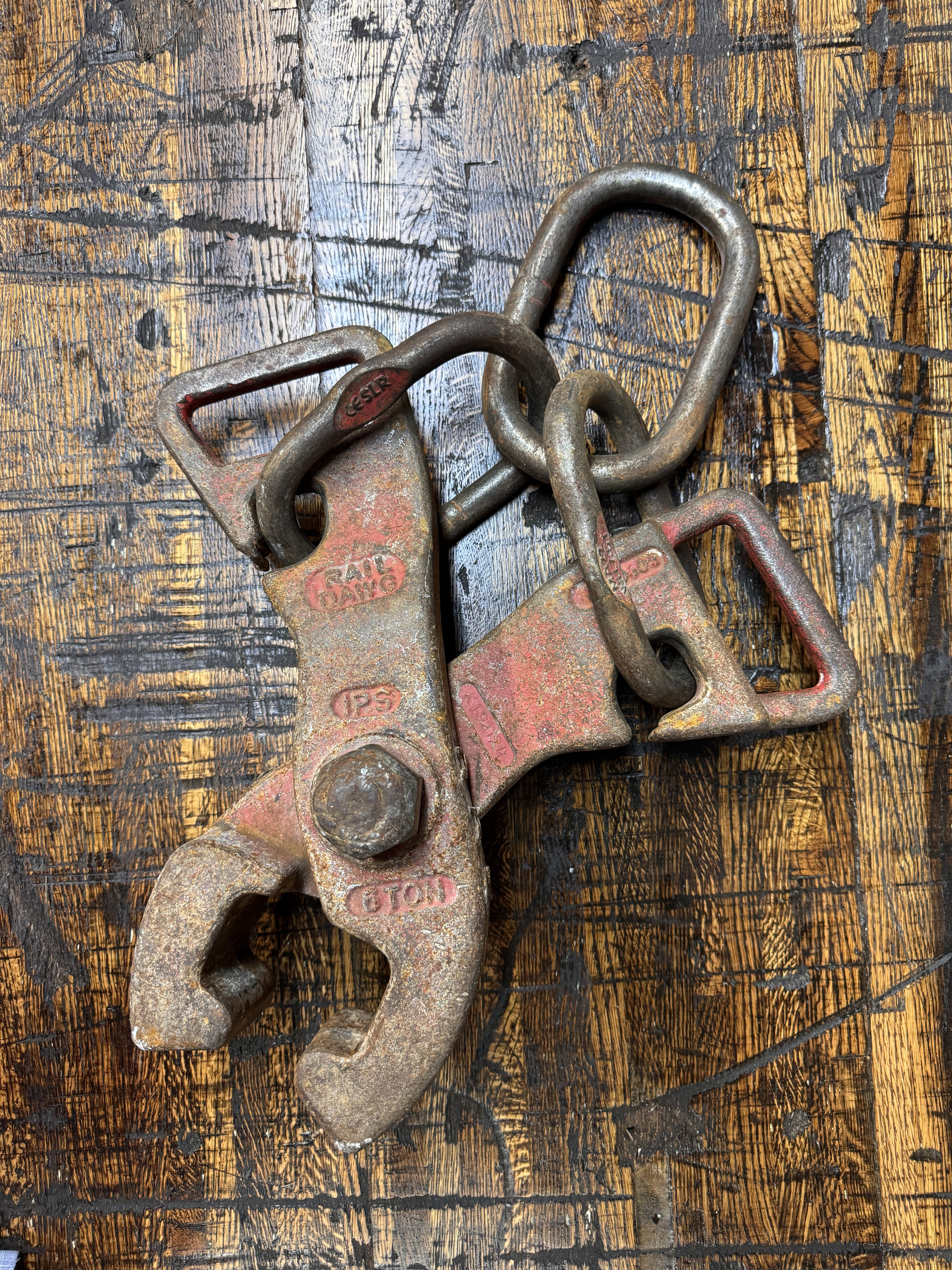 Take rail dogs.
Their hinged jaws clamp onto the head of a rail and hold tight enough to lift nearly a ton of steel. It’s a beautifully simple piece of railroad engineering—no complicated machinery, just leverage, grip, and a tool designed to do one hard job extremely well.
Measure the rail. Mark the center. Take a bite. Lift.
The jaws lock down as the weight comes up, giving crews a secure way to handle a piece of steel that would otherwise be nearly impossible to move safely by hand. And with a name like rail dog, it’s hard not to appreciate the personality built into railroad terminology. Around here, even the tools seem to have a little character.
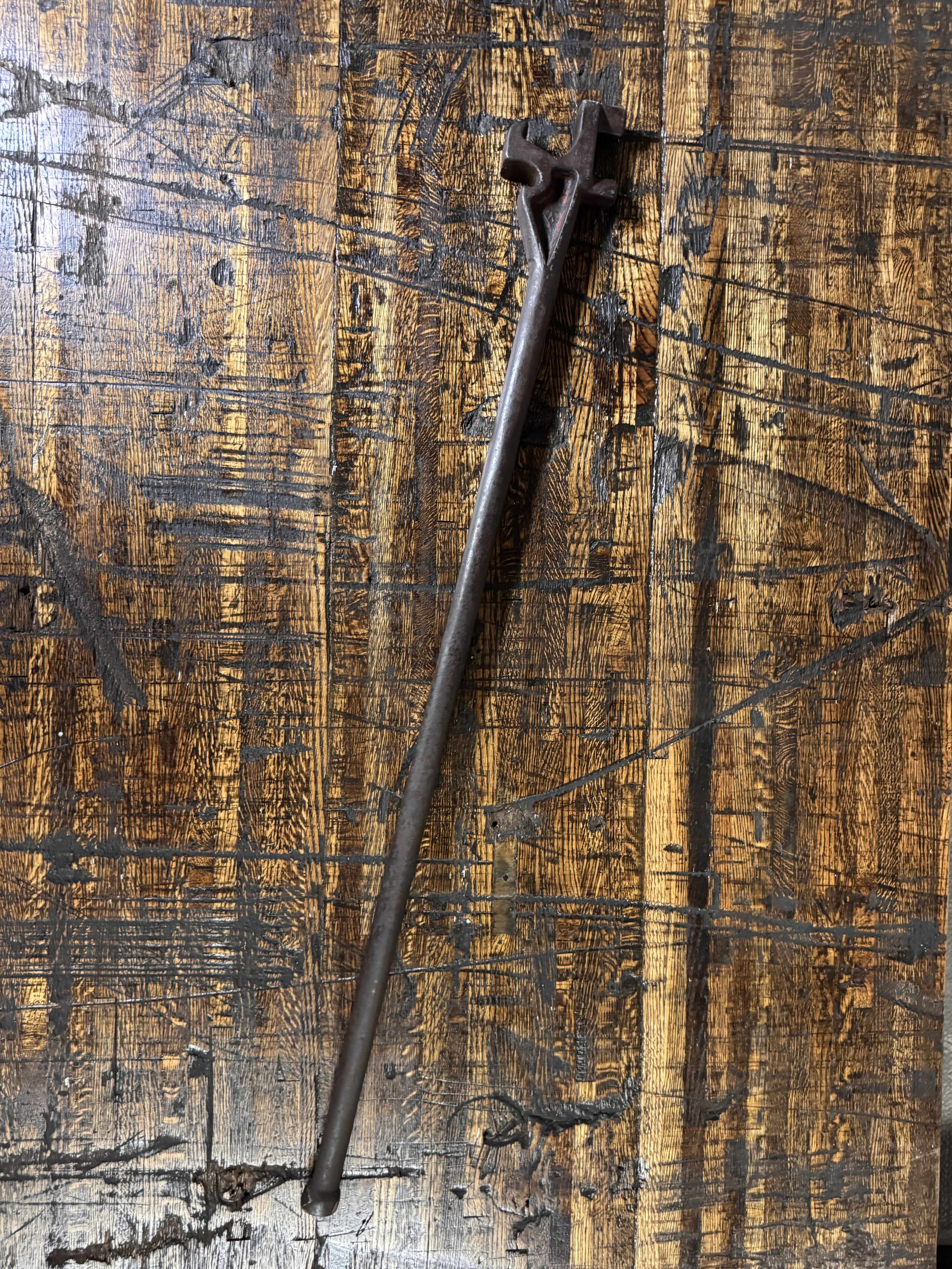 Then there’s the rail fork.
It's a deceptively simple tool built for a very specific job: rolling rail over. Made from high-carbon steel, it’s designed to stand up to the force required to move rail ranging from 90-pound to 141-pound sections. And considering a single 39- to 40-foot stick of rail can weigh anywhere from 1,000 to nearly 2,000 pounds, that’s no small task.
The fork slips beneath the head of the rail and catches against the web, giving the worker enough leverage to roll that massive piece of steel with steady, controlled pressure. No yanking. No jerking. Just a carefully designed tool doing exactly what railroad crews have relied on it to do for generations. It’s a perfect example of railroad ingenuity: straightforward, durable, and built around the idea that the right leverage can make even a ton of steel move.
And when the entire track needs to move?
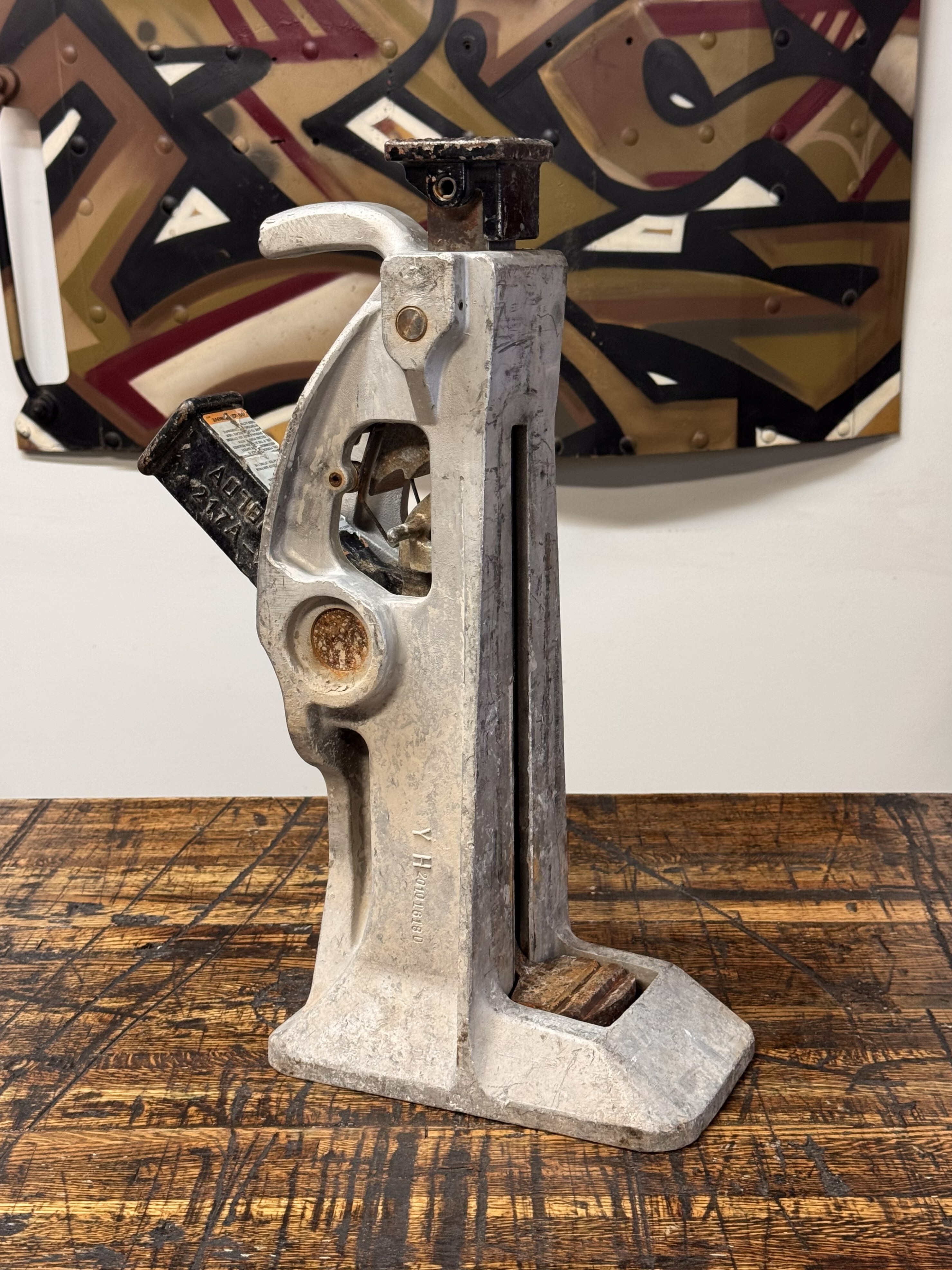 Bring in the track jack.
A track jack weighing roughly 50 pounds can lift more than 30,000 pounds of railroad track. Place several beneath the rails, and crews can raise an entire section of track out of the ground.
Simple. Powerful. Indispensable.
That same relationship between massive material and smart design runs through Rail Yard Studios.
We build railroads, reclaim steel from rail projects, and transform authentic railroad materials into furniture rather than letting that history disappear. Pieces such as our Sleepers Coffee Tables, Frog Desk and Coffee Tables, Crossing Coffee Tables, Switchpoint Desk and Ballast Deck Desk carry railroad materials and terminology into homes and offices.
The finished furniture may live far from the tracks.
But look closely.
The railroad is still there.